
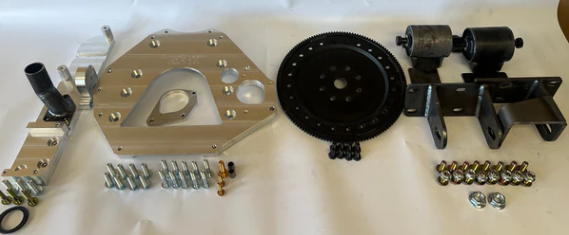
What’s Included in a Ford Cummins Conversion Kit?
Swapping a Cummins engine into a Ford truck has become one of the most popular conversions among diesel enthusiasts. Whether you’re upgrading for increased reliability, more torque, or long-term engine durability, a Ford Cummins conversion kit can simplify the process dramatically. But what exactly comes in a conversion kit—and why are these components essential for a successful swap?
Let’s break down what’s typically included in a Ford Cummins conversion kit and how each part plays a role in bringing Cummins power to your Ford chassis.
1. Engine Mounts (Motor Mounts)
At the heart of the conversion is a pair of CNC-cut motor mounts, specifically designed to adapt a Cummins 12-valve or 24-valve engine into a Ford truck frame. These mounts ensure proper alignment, fitment, and stability. High-quality mounts will usually feature:
- Laser-cut steel construction
- Robotically welded joints
- Pre-engineered positioning (often 2.5″ setback to accommodate mechanical fan clearance)
- Rubber isolators for vibration dampening
Engine mounts are not just physical supports—they ensure the engine sits at the correct angle and height, critical for driveability and durability.
2. Transmission Adapter Plate
The adapter plate is a key component in mating the Cummins engine to your Ford transmission—whether it’s a 4R100, ZF-6, or even an E4OD. This CNC-machined steel or billet aluminum plate connects the two different bellhousing patterns with precision.
You may also receive:
- Custom flexplate or flywheel for torque converter compatibility
- Crankshaft spacer or pilot bushing to ensure proper alignment
This component alone saves hours of fabrication and ensures smooth power transfer from the engine to the drivetrain.
3. Motor Mount Isolators & Frame Brackets
Along with engine mounts, many kits include frame-mounted isolators and brackets that work specifically with the Cummins and Ford crossmember setup. These are often overlooked but play a huge role in:
- Reducing frame stress
- Minimizing engine vibrations
- Ensuring long-term durability of both engine and chassis
Look for kits that use OEM-style rubber or polyurethane bushings, as these are designed to absorb more vibration than cheaper alternatives like hockey puck-style mounts.
4. Oil Pan and Pickup Tube (Optional in Some Kits)
Depending on the Cummins engine year and the Ford truck’s frame, the stock oil pan may interfere with crossmembers or steering linkages. Premium kits will include a modified or low-profile oil pan and pickup tube, ensuring the engine fits correctly without additional modification.
5. Intercooler and Radiator Mounts (Optional)
Swapping a Cummins into a Ford means the cooling system must be updated to handle different inlet/outlet configurations and higher cooling demands. Some kits include:
- Custom radiator brackets
- Intercooler mounting hardware
- Hoses and pipe reducers
If these aren’t included, your current radiator and intercooler may still work—but expect additional customization.
6. Wiring Harness and Sensor Adapters
Modern conversion kits sometimes come with a standalone wiring harness or wiring interface instructions. This is especially important for maintaining:
- Instrument cluster functions
- Starter and alternator controls
- Temperature and oil pressure sensors
- Tachometer functionality
While some builders choose to wire everything manually, pre-terminated wiring kits can save hours and reduce the chance of error.
7. Exhaust and Intake Components
A complete conversion kit may also include:
- Turbo downpipe
- Exhaust manifold adapters
- Cold air intake tubing
These parts help route intake and exhaust gases efficiently within the Ford engine bay. Depending on your turbo configuration (stock or aftermarket), custom fabrication may still be necessary.
8. Hardware and Installation Instructions
No good kit is complete without:
- Grade 8 hardware
- Bolts, washers, and spacers
- Detailed instructions or diagrams
Proper torque specs and guidance on mount placement and transmission alignment can be crucial—especially for first-time builders.
Bonus: Other Components You Might Need (Not Always Included)
Depending on the manufacturer, some Ford Cummins conversion kits may require you to source additional components separately:
- Fuel system adapters or regulators
- Throttle linkage or pedal adapters
- Power steering pump or AC bracket
- Driveshaft modifications
- ECM mounting and programming solutions
These aren’t always included because builds can vary so much depending on the Ford model (F-250 vs F-350) and Cummins generation (12v, 24v, or common rail).
Final Thoughts
A Ford Cummins conversion kit is more than just a handful of parts—it’s a thoughtfully engineered system that bridges the mechanical gap between two legendary platforms. The right kit can turn a complex engine swap into a manageable weekend project.
Before purchasing a kit, be sure to confirm:
- Compatibility with your Ford year/model
- The generation of your Cummins engine
- Whether you plan to use a manual or automatic transmission
Investing in a complete and well-supported conversion kit can save you time, frustration, and ultimately money—allowing you to focus on the fun part: driving a Ford with the heart of a Cummins. If you’re serious about diesel performance, a Cummins swap with the right kit is a hard combo to beat.