
What is the Difference Between Construction Engineering and Civil Engineering?
The Difference Between Construction Engineering and Civil Engineering is not well known. This is mainly because construction engineering is a relatively new field, and many people may not know about it. Additionally, these disciplines are closely related to one another. But don’t worry—in this article, we are going to highlight some of the key differences between these two engineering branches.
Join us to uncover the difference between construction engineering and civil engineering.
Basic Difference Between Construction Engineering and Civil Engineering
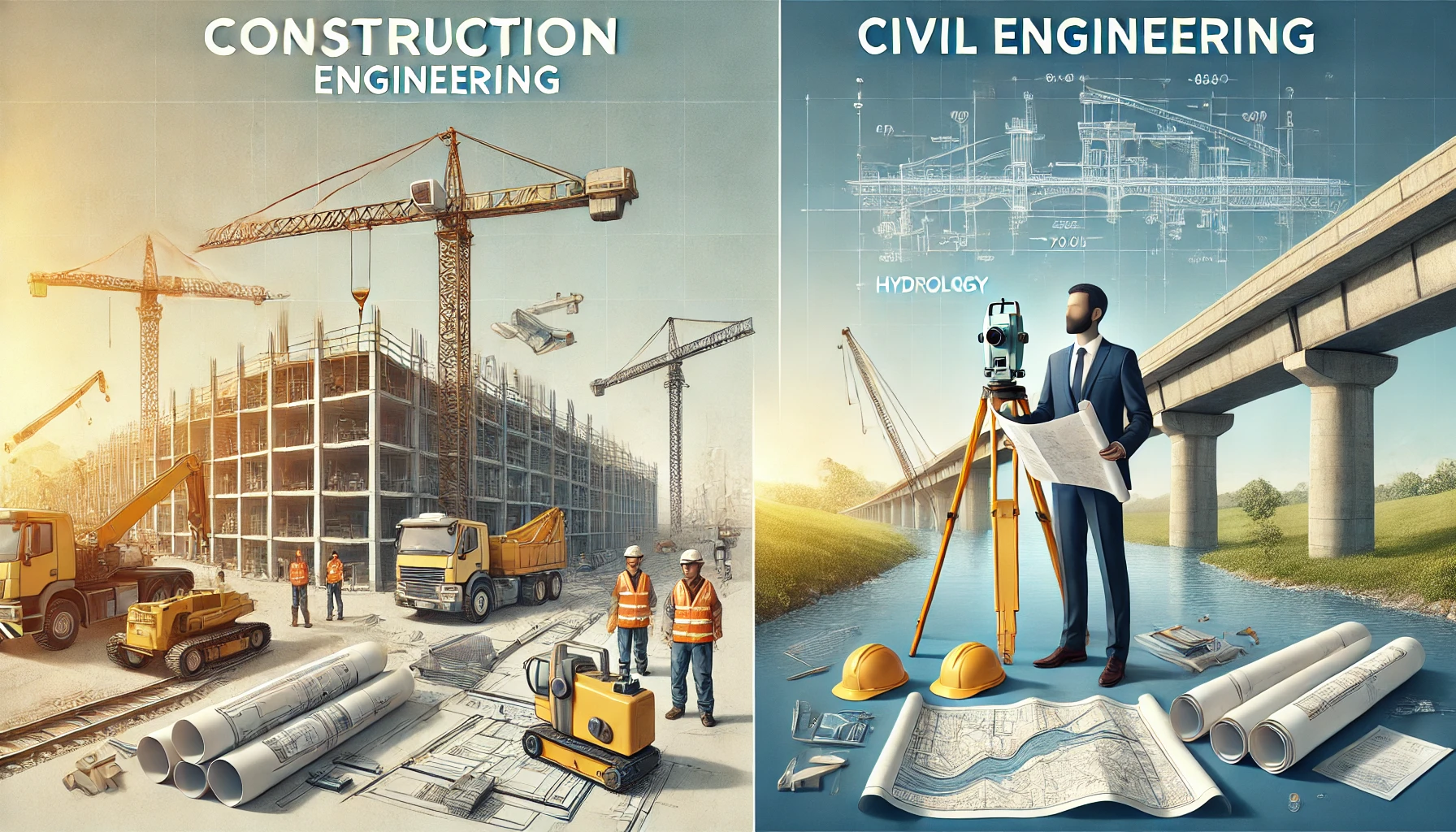
The main difference between construction engineering and civil engineering is that civil engineering deals with the study of infrastructure. Civil engineers design and analyze building structures such as bridges, dams, roads, airports, tunnels, and all sorts of residential and non-residential buildings. They work to create sustainable and resilient structures that can last a long time.
Conversely, construction engineering is all about executing civil engineering projects. Construction engineers play an important role in managing a construction project, including managing time, and cost, and coordinating plans.
Construction Engineering Vs Civil Engineering
Here are some more differences between construction engineering and civil engineering.
1) Degree and Courses
- Construction Engineering
The courses in construction engineering include physics, mathematics, economics, law, construction methods, construction management, cost management, etc. It includes the fundamentals of engineering as well as project management courses.
Construction engineers need to write a thesis or complete a capstone project to pass the course.
- Civil Engineering
The courses in civil engineering include the basics of engineering as well, such as maths, physics, chemistry, etc. They also include elective courses such as structural engineering, environmental engineering,g etc. It focuses on instilling knowledge about creating safe infrastructures.
Civil engineers also need to complete either a capstone project or a thesis.
2) Future Specializations
- Construction Engineering
Specializations in construction engineering include cost estimation, project management, construction methods, and quality control. Many Construction Estimators are working in the US as freelancers and part of firms. They play a key role in financial management by preventing cost overruns.
- Civil Engineering
Specializations in civil engineering include Geotechnical engineering, transportation engineering, Hydraulic engineering, structural engineering, and environmental engineering.
3) Career Prospects
- Construction Engineering
The future for construction engineering and civil engineering both is very bright. Construction engineers can work for contractors, developers, property owners, or Cost Estimating Firms such as bidding Estimates. Bidding Estimate is a good opportunity for construction engineers as it is quite an infamous cost-estimating company among contractors and architects.
Construction engineers can work on various types of construction projects including residential, commercial, or industrial buildings. They can further obtain certifications and licensing to boost their career.
- Civil Engineering
A civil engineer also has many opportunities career-wise. They can work for various sectors such as transportation, urban planning, research and academia, mining and petroleum, infrastructure development, disaster response, etc. They can take up jobs in both private and government sectors. They can also obtain further certifications and diplomas.
4) Key Duties and Responsibilities
- Construction Engineering
Another key difference between construction engineering and civil engineering is the responsibilities of these professions. Construction engineers are responsible for managing monetary resources, managing time frames, scheduling, quality control of a project, and keeping up with building codes. They maintain safety standards for the building. Furthermore, they play an important role in facilitating communication among stakeholders and all engineers, architects, and designers in a project.
- Civil Engineering
The duties of a civil engineer include planning and designing infrastructures that are safe and durable. They create detailed designs and analyze them to make sure there are no flaws. They carry out test runs and conduct feasibility studies before construction begins. In this way, they save time and money. Civil engineers also make sure that their designs are up to the construction codes.
Construction Engineer vs Civil Engineer: How to Choose?
Are you worried about making the wrong choice between a construction engineer and vs civil engineer? The career path you pick mainly depends upon your own goals, preferences, and aptitude. Since both of these disciplines have good opportunities in the future, your decision mainly depends upon what you like.
If you like creating different designs and exploring your creative side, you are more suited for civil engineering. Nevertheless, if you think managing projects is your forte then it’s better to opt for construction engineering.
Final Words
The difference between construction engineering and civil engineering lies in the responsibilities that these professions hold. Undoubtedly, both fields have contributed greatly to the construction industry. Civil Engineering is a theoretical approach while construction engineering falls more on the practical side. It deals with the execution of construction projects rather than designing them. When it comes to which field is the best, there is no right answer. Construction engineering and civil engineering both need each other. They go hand in hand during construction projects.