
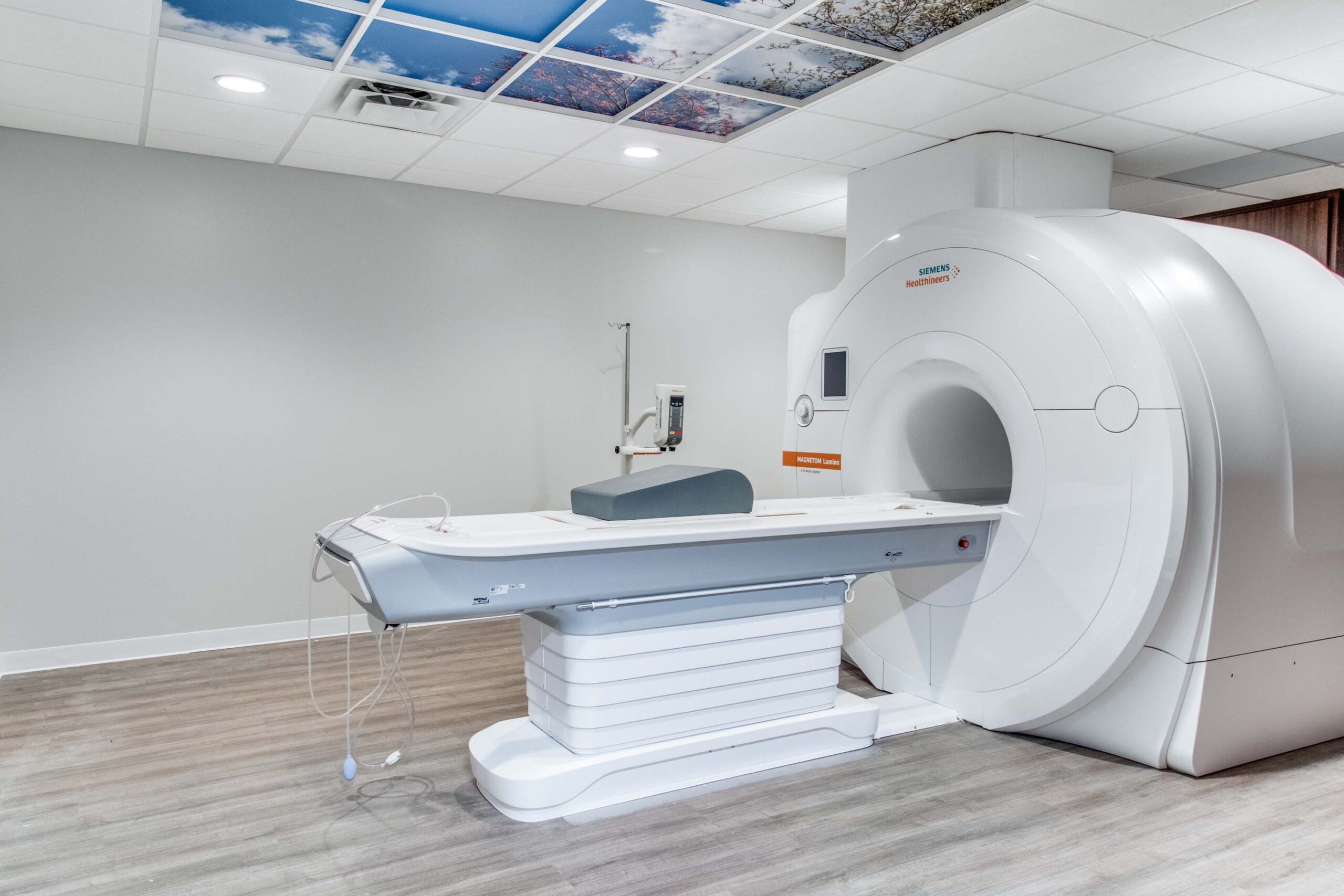
What Are the Main Parts of an MRI Machine and Their Functions
Magnetic Resonance Imaging (MRI) is a powerful diagnostic tool used to capture detailed images of the body’s internal structures. MRI scanners are complex machines composed of several key parts, each playing a crucial role in producing high-resolution images. Understanding the main components of an MRI machine helps in appreciating its functionality and advancements in medical imaging.
1. Main Components of an MRI Machine
a) Magnet System
The magnet is the most important and expensive part of an MRI machine. It creates a strong magnetic field necessary for aligning hydrogen atoms in the body, a crucial step in image formation. There are three types of MRI magnets:
- Superconducting Magnets: The most commonly used type, generating high magnetic fields with liquid helium cooling.
- Resistive Magnets: Use electrical current but require large amounts of power.
- Permanent Magnets: Found in low-field MRI machines and used for open MRI systems.
b) Radiofrequency (RF) Coils
RF coils are used to transmit and receive radiofrequency signals that interact with the body’s hydrogen atoms. These coils are placed around the body part being scanned and play a critical role in capturing detailed images.
- Transmit Coils: Generate radio waves to excite hydrogen protons.
- Receive Coils: Detect signals emitted by the protons as they return to their normal state.
- Specialized Coils: Different body parts require dedicated coils, such as head coils for brain imaging and knee coils for joint scans.
c) Gradient Coils
Gradient coils are responsible for spatial encoding, which allows the MRI scanner to differentiate between different tissues. These coils:
- Alter the main magnetic field slightly to provide different signal intensities.
- Help create 3D images by adjusting the field along the X, Y, and Z axes.
- Enable fast imaging techniques such as functional MRI (fMRI) and diffusion-weighted imaging (DWI).
d) Patient Table
The patient table, also called the patient couch, is a motorized platform that moves the patient into the MRI bore (the central tunnel of the scanner). It is designed to be stable, comfortable, and adjustable to ensure precise positioning. Some tables have weight-bearing capabilities for specialized imaging.
e) Computer System & Control Console
MRI scans require powerful computers to process and reconstruct images. The computer system controls all functions, including:
- Managing magnetic field strength and RF pulse sequences.
- Processing raw data into high-resolution images.
- Allowing radiologists to adjust contrast levels and view detailed anatomical structures.
f) RF Shielding & Faraday Cage
MRI machines are housed in specially designed rooms with RF shielding, also known as a Faraday cage. This prevents external radiofrequency interference, ensuring that the MRI images are free from noise or distortion.
2. How Do These Parts Work Together?
- Magnet Aligns Hydrogen Protons: The strong magnetic field aligns hydrogen atoms in the body.
- RF Coils Transmit Pulses: A radiofrequency pulse is sent to excite these protons.
- Protons Emit Signals: As they return to their original state, they emit signals captured by RF coils.
- Gradient Coils Create Spatial Encoding: These coils help differentiate between tissues.
- Computer Processes the Signals: The data is converted into high-resolution images for diagnosis.
3. Importance of Each MRI Component
- High-field magnets improve image clarity.
- Specialized coils enhance imaging accuracy for different body parts.
- Gradient coils enable faster imaging and advanced scans like functional MRI.
- Computer processing power affects scan speed and resolution.
Conclusion
An MRI machine is a sophisticated imaging system composed of multiple essential parts working together to produce detailed scans. The magnet system, RF coils, gradient coils, patient table, computer system, and shielding all contribute to the accuracy and efficiency of MRI imaging. With advancements in technology, modern MRI scanners continue to improve diagnostic capabilities, enhancing patient care across various medical fields.