
What Are the Key Benefits of AI in Manufacturing Today?
The manufacturing industry is undergoing a seismic transformation, and Artificial Intelligence (AI) is at the heart of it. From optimizing supply chains to predictive maintenance and quality assurance, AI is proving to be more than a buzzword; it’s becoming a critical component in achieving operational efficiency, innovation, and competitiveness.
In this blog post, we will explore the key benefits of AI in manufacturing today, examine real-world use cases, and understand how this technology is shaping the future of production.
1. Predictive Maintenance: Minimizing Downtime and Costs
One of the most celebrated applications of AI in manufacturing is predictive maintenance. Traditional maintenance models—reactive or scheduled—are either too late or inefficient. AI-powered predictive maintenance, on the other hand, uses data from sensors, machines, and historical records to predict equipment failures before they happen.
Benefits:
- Reduces unplanned downtime by forecasting machine failures.
- Cuts maintenance costs by replacing parts only when needed.
- Extends machinery lifespan with better wear-and-tear monitoring.
Example: General Motors implemented AI-based predictive maintenance systems that reduced unplanned downtime by up to 50%, saving millions annually.
2. Quality Control and Defect Detection
In manufacturing, quality assurance is paramount. AI systems—particularly those using computer vision—are revolutionizing how defects are detected on production lines.
Benefits:
- Faster and more accurate inspections than human workers.
- Real-time identification of defective products, reducing waste.
- Consistent quality across high-volume production batches.
Example: Siemens uses AI-powered vision systems that detect microscopic cracks and imperfections in products that human inspectors could easily miss.
3. Process Optimization and Efficiency Gains
AI algorithms analyze massive volumes of operational data to uncover patterns, inefficiencies, or bottlenecks in production processes. With machine learning, manufacturers can automate decisions that optimize workflows and resource utilization.
Benefits:
- Improves throughput without increasing costs.
- Reduces energy consumption through smarter process scheduling.
- Minimizes material waste by optimizing raw material usage.
Example: Bosch uses AI to optimize injection molding processes, reducing scrap rates by up to 30% and shortening cycle times.
4. Supply Chain and Inventory Management
AI is streamlining supply chains by making them more agile, resilient, and responsive to demand fluctuations. Predictive analytics helps forecast inventory needs, identify delays, and assess risks across the supply network.
Benefits:
- Improved demand forecasting, reducing stockouts and overstocking.
- Enhanced supplier management using real-time risk analysis.
- Greater transparency and control across the supply chain.
Example: Toyota integrates AI-driven demand forecasting tools to align production with real-time market needs, improving supply chain efficiency significantly.
5. Customization and Flexible Manufacturing
Consumer demand is shifting towards more personalized products. AI enables manufacturers to adopt mass customization without compromising on cost or speed.
Benefits:
- Flexible production lines that adapt to custom orders.
- Real-time data analysis to adjust production in response to consumer trends.
- Efficient batch processing that balances customization with scalability.
Example: Adidas’ Speedfactory uses AI to support on-demand production of custom footwear, significantly reducing time-to-market.
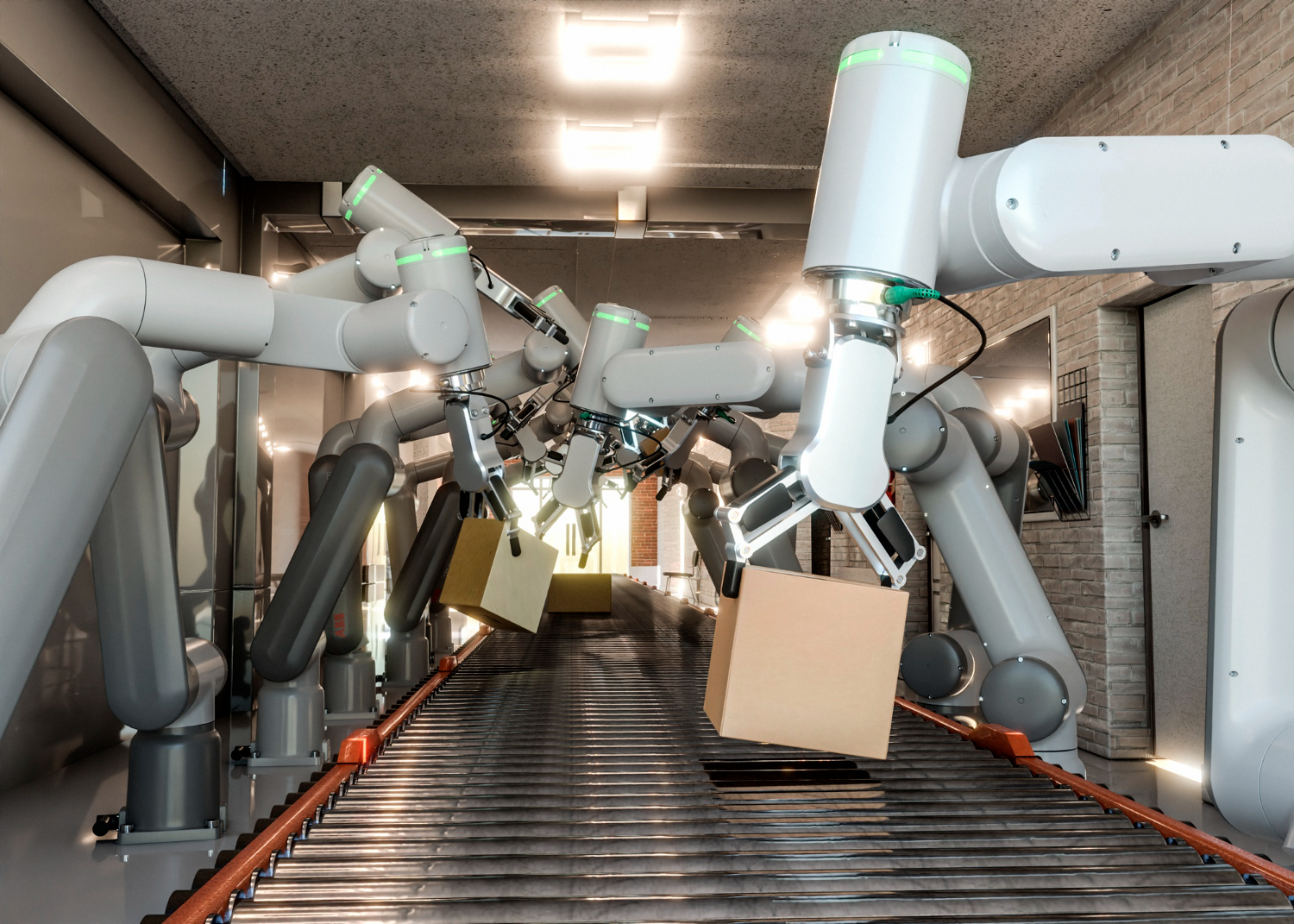
6. Human-Robot Collaboration (Cobots)
AI is the driving force behind the next generation of collaborative robots or cobots. Unlike traditional robots, which are confined to specific tasks or areas, cobots work alongside humans to increase productivity and reduce physical strain.
Benefits:
- Improves worker safety by handling dangerous or repetitive tasks.
- Boosts efficiency through hybrid human-machine workflows.
- Adapts in real-time to human actions using machine learning.
Example: Ford’s assembly lines use cobots to assist workers with lifting and fitting parts, improving ergonomics and efficiency.
7. Cost Reduction and ROI Improvement
AI helps manufacturers reduce costs across the board—whether through minimized waste, lower energy usage, better labor allocation, or fewer product recalls. While AI implementation can be capital-intensive initially, the return on investment (ROI) is often substantial.
Benefits:
- Reduces operational and labor costs through automation.
- Minimizes errors and rework, saving time and materials.
- Increases profitability through better product and process insights.
Example: A McKinsey study found that companies using AI in manufacturing experienced cost reductions of up to 20% and productivity increases of up to 25%.
8. Real-Time Decision Making
Manufacturers are increasingly turning to real-time analytics powered by AI to guide decisions on the factory floor. With AI, machines and systems can communicate, learn, and adapt instantly.
Benefits:
- Faster response to production issues.
- Informed strategic decisions using live data dashboards.
- Increased agility to manage sudden market or operational changes.
Example: ABB uses AI-driven dashboards to monitor factory performance, enabling proactive adjustments to optimize resource allocation.
9. Enhanced Worker Safety
AI can proactively address health and safety risks in the workplace. Through image recognition, sensor data, and predictive analytics, AI systems can flag potential hazards before incidents occur.
Benefits:
- Reduces workplace accidents through early hazard detection.
- Monitors worker fatigue and ergonomics to prevent injuries.
- Ensures compliance with health and safety regulations.
Example: GE uses AI-powered wearable sensors that alert supervisors to unsafe worker behaviors or environmental risks in real time.
10. Sustainability and Environmental Impact
AI supports green manufacturing initiatives by enabling more efficient energy use, reducing waste, and facilitating closed-loop production models.
Benefits:
- Reduces carbon emissions by optimizing energy consumption.
- Supports recycling and reuse through AI-guided material tracking.
- Improves resource efficiency, aligning with ESG goals.
Example: Schneider Electric uses AI for real-time energy monitoring, helping manufacturers reduce energy usage by up to 30%.
The Future of AI in Manufacturing
Looking ahead, AI will continue to evolve and integrate with other technologies such as:
- 5G connectivity for real-time machine communication.
- Digital twins for virtual simulation of production environments.
- Edge computing for faster data processing close to the source.
- Generative AI for design, prototyping, and workflow optimization.
As AI becomes more accessible, even small and medium-sized enterprises (SMEs) will be able to leverage its power, leveling the playing field across the industry.
Conclusion
AI is not just a futuristic concept—it is already delivering tangible benefits to manufacturers across the globe. Whether it’s improving product quality, reducing downtime, or enabling mass customization, AI is transforming every facet of the manufacturing process.
Adopting AI is no longer optional; it’s a strategic imperative. Manufacturers that embrace AI now will be better positioned to lead in an increasingly competitive, fast-paced, and technology-driven world.