
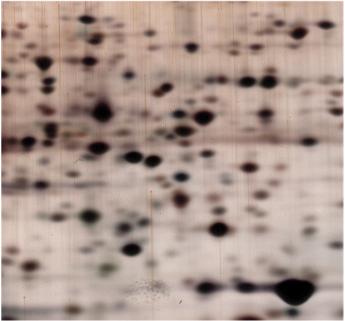
What Are the Benefits of 2D Gel Electrophoresis?
2D gel electrophoresis (2D GE) is a powerful technique that revolutionized the study of proteins, providing detailed separation and analysis of complex protein mixtures. It allows researchers to effectively identify and quantify proteins, making it a key tool in the fields of proteomics, molecular biology, and biotechnology. Among the different forms of gel electrophoresis, 2D protein gel electrophoresis stands out due to its ability to separate proteins based on two distinct properties: isoelectric point (pI) and molecular weight.
In this article, we’ll explore the benefits of 2D protein gel electrophoresis and how it has become an essential method for studying proteins in various biological and pharmaceutical applications.
What Is 2D Protein Gel Electrophoresis?
2D protein gel electrophoresis is a two-step process that separates proteins using two distinct methods:
Isoelectric Focusing (IEF): Proteins are first separated based on their isoelectric point, which is the pH at which a protein carries no net charge.
SDS-PAGE (Sodium Dodecyl Sulfate Polyacrylamide Gel Electrophoresis): In the second dimension, proteins are separated based on their molecular weight.
This combination of techniques provides highly specific protein separation, allowing scientists to resolve thousands of proteins in a single gel. The ability to simultaneously consider a protein’s charge and size makes 2D protein gel electrophoresis one of the most robust methods for comprehensive protein analysis.
The Key Benefits of 2D Protein Gel Electrophoresis
High Resolution for Complex Protein Mixtures
One of the primary advantages of 2D protein gel electrophoresis is its high resolution. By separating proteins based on two distinct properties—pI and molecular weight—researchers can achieve far greater protein separation than with one-dimensional electrophoresis alone. This increased resolution is particularly valuable for studying complex protein mixtures, such as whole cell lysates or tissue samples, where the proteins of interest may only be present in small amounts.
In many cases, 2D protein gel can resolve thousands of individual protein spots, making it ideal for proteomic studies that require detailed analysis of protein expression, modification, and interaction.
Accurate Protein Quantification
Another key benefit of 2D protein gel electrophoresis is its ability to quantify proteins accurately. After separating proteins on the gel, researchers can stain the gel using various techniques, such as Coomassie Brilliant Blue, silver staining, or fluorescent dyes. The intensity of the staining correlates with the protein concentration, enabling quantification of each protein spot.
This quantitative capability is especially useful for comparing protein expression levels under different experimental conditions. For example, 2D protein gel electrophoresis is often used to compare the proteome of cells before and after treatment with a drug, helping to identify proteins that are upregulated or downregulated in response to the treatment.
Post-Translational Modification Analysis
Post-translational modifications (PTMs) such as phosphorylation, glycosylation, and ubiquitination play crucial roles in regulating protein function. 2D protein gel electrophoresis is an effective method for analyzing PTMs, as it can separate different isoforms of the same protein based on their charge and molecular weight differences.
For instance, a phosphorylated protein will have a different pI than its unmodified counterpart, allowing researchers to separate and identify phosphorylated proteins using 2D protein gel. This capability is invaluable for studying signaling pathways and understanding how PTMs affect protein function and cellular processes.
Proteome-Wide Analysis
2D protein gel electrophoresis is a central tool in proteomics, a field dedicated to the large-scale study of proteins. Proteomics aims to understand the structure, function, and interaction of proteins within a biological system, and 2D protein gel is often used to separate and analyze large numbers of proteins from a single sample.
By providing a detailed view of the proteome, 2D protein gel electrophoresis allows researchers to identify proteins that play key roles in cellular processes, diseases, or drug responses. It is widely used in cancer research, neurobiology, immunology, and many other fields where understanding the protein landscape is critical for advancing scientific knowledge.
Protein Identification Through Mass Spectrometry (MS)
While 2D protein gel electrophoresis excels at separating proteins, it can be combined with other analytical techniques for even more in-depth protein analysis. One such technique is mass spectrometry (MS), which is commonly used to identify proteins after they have been separated by 2D protein gel.
Once proteins are separated and visualized on the gel, specific protein spots of interest can be excised from the gel, digested into peptides, and analyzed by mass spectrometry. This approach provides precise information about the protein’s identity, including its amino acid sequence, post-translational modifications, and potential interactions with other proteins.
By coupling 2D protein gel electrophoresis with mass spectrometry, researchers can gain both quantitative and qualitative insights into the proteins in their sample, making this an incredibly powerful combination for protein research.
Detection of Protein Isoforms and Variants
One of the strengths of 2D protein gel electrophoresis is its ability to detect protein isoforms—different molecular forms of the same protein that may arise from alternative splicing, PTMs, or genetic mutations. Because isoforms may have different charges or molecular weights, they can be separated using 2D protein gel, allowing researchers to distinguish between them.
This feature is particularly important for studying diseases like cancer, where protein isoforms may have distinct roles in tumor progression. By identifying and characterizing protein isoforms using 2D protein gel electrophoresis, researchers can uncover new biomarkers and therapeutic targets for disease treatment.
Reliable and Reproducible Results
When performed under optimized conditions, 2D protein gel electrophoresis provides highly reproducible results. This reliability is essential for comparative studies, where consistency in protein separation is crucial for drawing accurate conclusions. Many researchers prefer 2D protein gel electrophoresis for its robustness and ability to generate consistent data across different experiments and sample types.
Cost-Effective and Scalable
Compared to some newer proteomic technologies, 2D protein gel electrophoresis is relatively cost-effective. The materials and equipment required are widely available, and the technique can be scaled to accommodate different sample sizes and experimental designs. For laboratories with limited resources, 2D protein gel electrophoresis provides a practical and powerful solution for proteomic analysis without the need for expensive instrumentation.
Conclusion
2D protein gel electrophoresis offers a range of significant benefits, making it an essential tool for proteomics and protein analysis. Its high resolution, ability to quantify proteins, and capacity to analyze post-translational modifications and protein isoforms set it apart from other techniques. Whether researchers are studying cellular signaling pathways, disease biomarkers, or drug responses, 2D protein gel electrophoresis provides a detailed and reliable method for exploring the proteome.
By integrating 2D protein gel with other techniques like mass spectrometry, scientists can gain comprehensive insights into protein structure, function, and interactions. As the field of proteomics continues to advance, 2D protein gel electrophoresis remains a cornerstone for achieving accurate and in-depth protein analysis.