
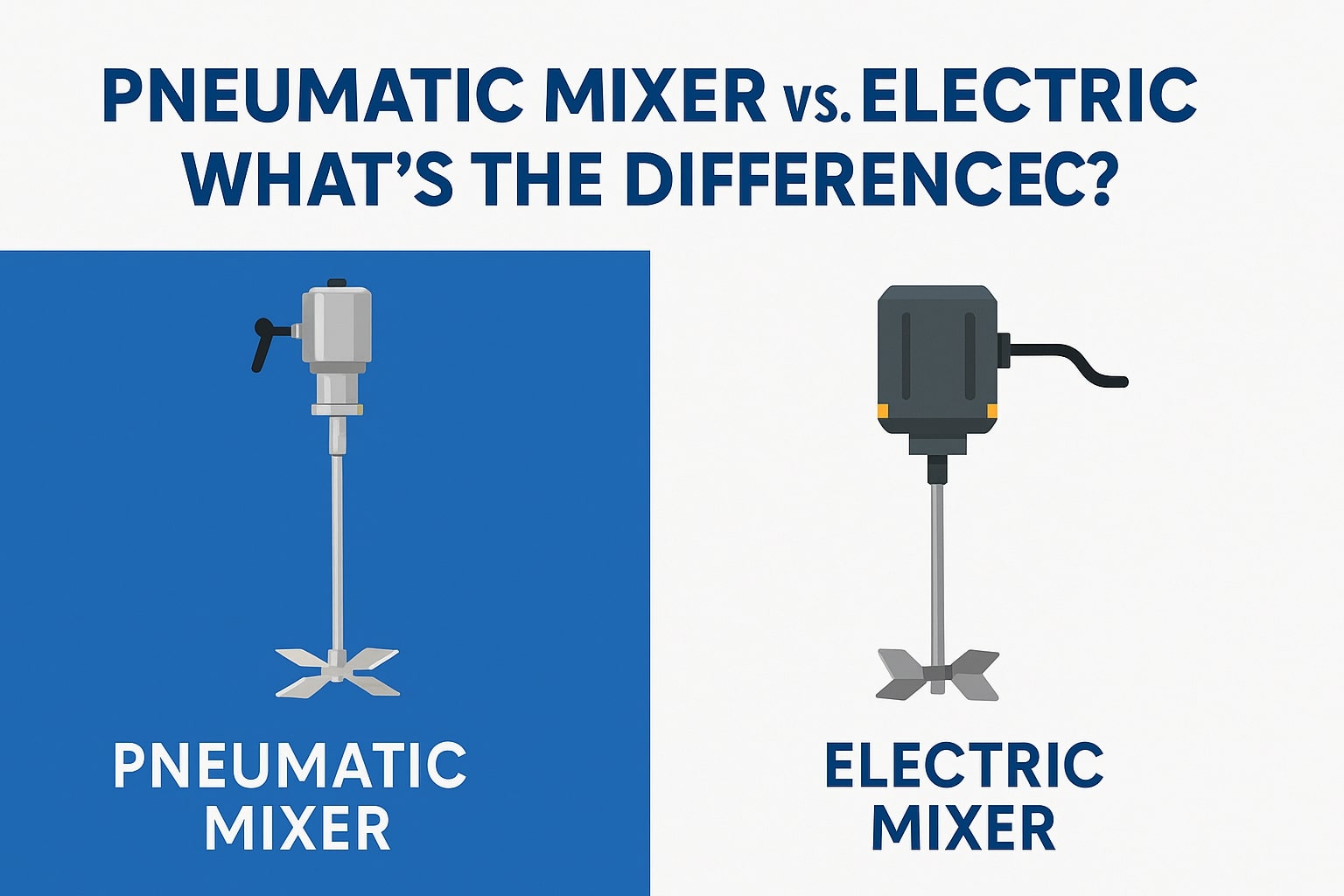
Pneumatic Mixer vs. Electric Mixer: What’s the Difference?
In industrial mixing, choosing the right equipment plays a major role in performance, safety, and long-term costs. Two of the most common types of mixers are pneumatic mixers and electric mixers.
Each has unique benefits and drawbacks, depending on the application. If you’re sourcing machinery for a facility and evaluating suppliers, it’s worth understanding the differences — especially if you’re searching for a pneumatic mixer manufacturer in Dubai.
Let’s break down the major differences between pneumatic and electric mixers in four key categories: efficiency, safety, maintenance, and cost.
1. Efficiency
Electric Mixers:
Electric mixers are known for consistent power delivery and are ideal for applications where a steady speed is required. They are often plug-and-play, which makes them easy to install in most work environments. However, they can overheat if used continuously and may not be suitable for explosive or high-moisture environments.
Pneumatic Mixers:
Pneumatic mixers use compressed air instead of electricity, making them highly adaptable for continuous use. Their efficiency stands out in industries where quick batch mixing or variable speed control is needed. Because they don’t rely on electric motors, pneumatic mixers can operate without overheating, even under tough industrial conditions.
Verdict:
If you need flexibility and long-term, high-volume mixing, pneumatic mixers provide more robust efficiency.
2. Safety
Electric Mixers:
Safety is a major concern with electric mixers, especially in volatile or flammable environments. The risk of electrical sparks or motor failures can be dangerous in chemical, pharmaceutical, or paint industries. Extra safety features may be required, which adds to the cost.
Pneumatic Mixers:
This is where pneumatic mixers shine. Since they do not require electrical power, they are intrinsically safer for use in hazardous or explosion-prone environments. Their design ensures spark-free operation, which is crucial in sectors dealing with volatile compounds.
Verdict:
Pneumatic mixers are the better choice for hazardous zones where safety regulations are strict.
3. Maintenance
Electric Mixers:
Electric mixers usually require more frequent maintenance. Their motors, wiring, and other electronic components are prone to wear and can be expensive to repair. Any electrical failure could result in downtime or even damage to your product batch.
Pneumatic Mixers:
Pneumatic mixers tend to have a simpler mechanical structure with fewer parts that wear out over time. They’re easier to clean and maintain, especially in industries that require strict hygiene protocols, such as food and pharmaceuticals. Additionally, pneumatic motors are sealed, protecting them from dust and moisture.
Verdict:
Pneumatic mixers offer lower maintenance costs and less operational downtime, giving them an edge in industrial environments.
Related Post: Boosting Business Efficiency with Olive Oil Filling Machines in the UAE
4. Cost (Initial vs Long-Term)
Electric Mixers:
Initial investment in electric mixers is typically lower than pneumatic systems. However, when considering long-term use, the cost of electricity, safety compliance upgrades, and maintenance can drive up the total cost of ownership.
Pneumatic Mixers:
Although pneumatic mixers may require a higher upfront cost and the installation of a compressed air system, they offer greater durability and cost savings over time. Their long service life and reduced energy risks often result in a better return on investment.
Verdict:
For long-term cost-effectiveness, especially in demanding environments, pneumatic mixers are a more economical choice.
Related Post: Industrial Metal Detectors in UAE: Safeguarding Efficiency and Safety
Where Pneumatic Mixers Are a Better Fit
Pneumatic mixers are especially well-suited for:
- Chemical and petrochemical plants
- Paint and coating industries
- Pharmaceutical manufacturing
- Food and beverage production
- Any environment classified as hazardous or explosion-prone
In Dubai and across the UAE, industries operating in extreme climates or high-risk sectors often prefer pneumatic mixing solutions. Whether you’re upgrading an existing production line or starting a new project, partnering with a trusted pneumatic mixer manufacturer can ensure safety, compliance, and performance.
Final Thoughts
Choosing between a pneumatic mixer and an electric mixer isn’t just about upfront costs — it’s about long-term performance, safety, and operational efficiency. While electric mixers may suit controlled environments with low risk, pneumatic mixers offer superior safety, lower maintenance, and greater durability, making them the preferred choice for many industrial applications.
If your business requires reliable, explosion-proof, and efficient mixing equipment, it’s worth consulting with a specialised pneumatic mixer manufacturer in Dubai. The right partner can guide you toward solutions that improve productivity while meeting your industry’s safety standards.