
Can Performance-Based Fire Design Outperform Traditional Codes?
As our cities stretch higher and our buildings become more complex, the question of fire safety takes on a new level of importance. For decades, prescriptive fire codes have been the foundation of building safety, providing clear, rigid rules to protect occupants and property. While these traditional codes have undoubtedly saved lives, they often leave little room for creative or innovative design.
Enter performance based fire safety design, a modern approach that offers flexibility and tailored solutions without compromising safety. But can it truly outperform the trusted, familiar methods we’ve relied on for so long? Let’s delve into what makes this approach so compelling.
The Rigidity of Traditional Codes
Prescriptive fire codes are highly detailed rulebooks that dictate exact requirements for materials, layouts, fire exits, and equipment. These codes are designed to be clear and universal, allowing for straightforward compliance and enforcement.
However, the same clarity that makes these codes accessible can also make them restrictive. For architects and engineers who dream of unique atriums, floating staircases, or dramatic open spaces, traditional codes can feel like a creative barrier. As construction methods and materials evolve, these rigid codes sometimes fail to accommodate innovative solutions, forcing designers to make aesthetic or functional compromises.
What Sets Performance-Based Design Apart?
Unlike prescriptive codes, performance-based fire safety design focuses on outcomes rather than checklists. Instead of following a pre-defined set of rules, this approach asks: “What performance level must be achieved to ensure occupant safety?”
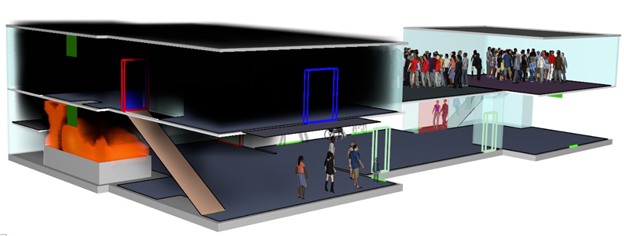
Engineers and designers set specific safety objectives and then use advanced modeling and simulation tools to predict how a building will perform under different fire scenarios. Smoke movement, heat distribution, evacuation timing, and structural integrity are all carefully analyzed to create a fully customized safety strategy.
This level of flexibility allows architects to push creative boundaries while ensuring robust protection for people and property.
Empowering Architectural Innovation
Today’s buildings are not just functional shelters; they are statements of identity, technology, and vision. Iconic museums, futuristic corporate headquarters, and sprawling entertainment venues all aim to create memorable experiences.
With performance-based design, architects no longer have to sacrifice these ambitions for safety. Instead, they can integrate beautiful open spaces, transparent facades, and unconventional layouts while maintaining or even exceeding the safety standards set by traditional codes.
This empowers architects and developers to dream bigger without compromising on essential life safety.
Technology as a Game Changer
Advanced digital tools play a central role in performance-based design. High-level fire dynamics simulations allow engineers to virtually “test” a building’s response to various fire situations before construction even begins.
Using software to model smoke spread, heat buildup, and evacuation flows, designers can fine-tune safety measures with incredible precision. Rather than installing one-size-fits-all systems, fire protection strategies can be optimized for each unique building.
Such precision makes buildings safer and often results in more efficient use of materials and systems, saving money in the long term.
Customizing Safety to Specific Risks
Every building has a unique risk profile. A children’s hospital, for example, has entirely different evacuation needs than a luxury hotel or an industrial warehouse.
Performance-based design allows fire safety strategies to be tailored to these individual risk profiles. In a hospital, the focus might be on creating fire-safe compartments to allow for horizontal evacuations and protect immobile patients. In a concert arena, rapid smoke removal and wide egress routes would be the priority.
This personalized approach ensures that fire protection measures directly address the building’s true needs rather than applying blanket solutions.
Gaining Regulatory Acceptance
One of the biggest questions around performance-based design is whether it’s acceptable under building regulations. While initially met with skepticism, more and more regulatory bodies worldwide are recognizing the value and potential of this approach.
Approval processes typically require detailed engineering analyses, peer reviews, and comprehensive safety documentation to prove that the design meets or exceeds code requirements.
As performance-based design becomes more widespread, clear guidelines and standards continue to develop, making it an increasingly accessible option for forward-thinking projects.
Beyond Safety: Economic and Environmental Benefits
Performance-based fire safety design doesn’t just enhance safety and design freedom it can also offer significant economic and environmental advantages.
Because the systems are tailored precisely to the building’s actual needs, unnecessary overdesign is avoided. This means fewer materials, lower installation costs, and reduced long-term maintenance expenses.
Additionally, many performance-based solutions incorporate environmentally friendly suppression methods and energy-efficient equipment, aligning with green building standards and supporting overall sustainability goals.
Supporting a Future of Safer, More Inspiring Spaces
The built environment is evolving at an incredible pace. As we design taller towers, more open interiors, and multi-use spaces that blend living, working, and leisure, traditional fire codes struggle to keep up.
Performance-based fire safety design represents a progressive shift in how we think about protecting occupants and assets. Rather than imposing limitations, it enables solutions that are intelligent, adaptable, and uniquely suited to each project’s vision and purpose.
For architects, developers, and safety engineers, embracing this approach means not only meeting today’s demands but also preparing for tomorrow’s possibilities. It offers a path to safer, more beautiful, and more innovative structures, a future where fire safety and design excellence walk hand in hand.