
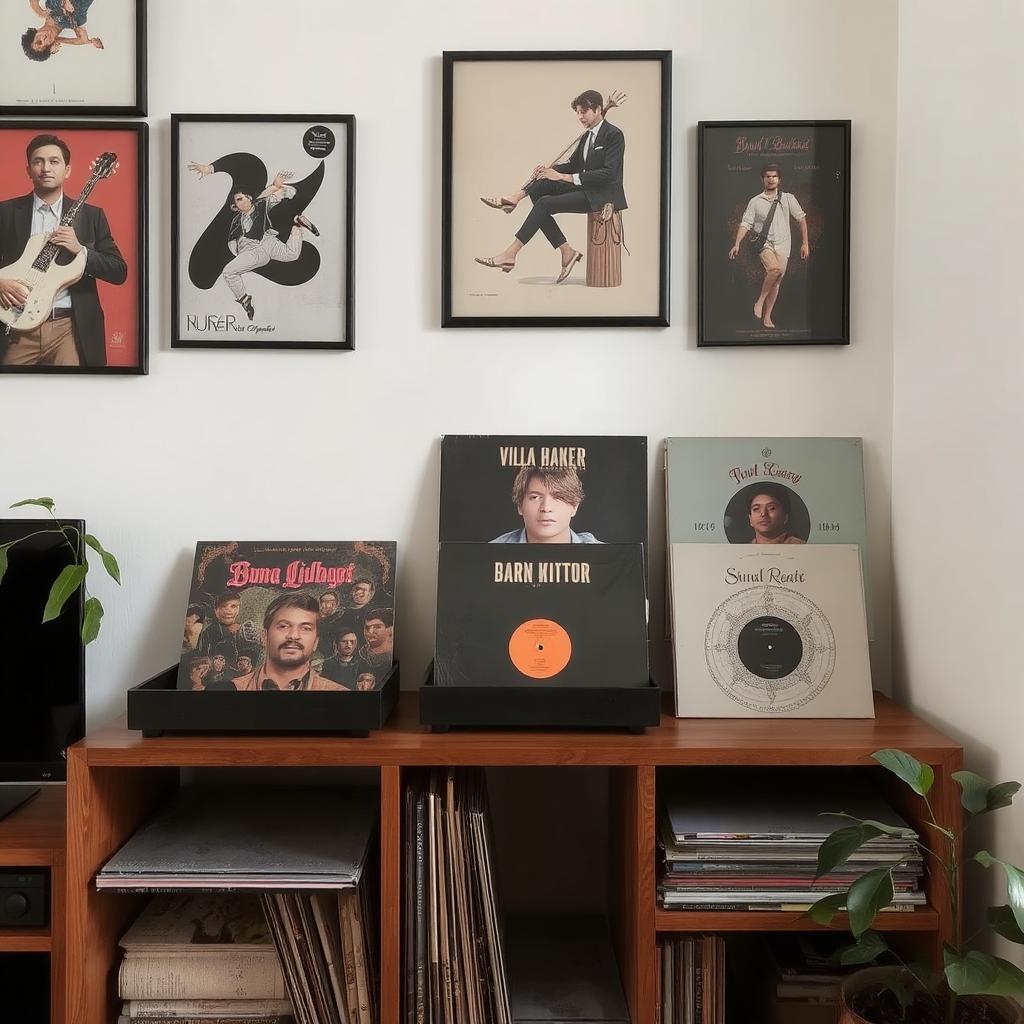
A Brief History of HMV (His Master’s Voice) in India
The story of HMV (His Master’s Voice) in India is closely tied to the country’s musical journey from the early 20th century to the dawn of the digital age. As one of the oldest and most iconic names in the Indian music industry, HMV played a central role in bringing recorded sound to Indian homes and building a culture of music appreciation across generations. From the era of gramophones and shellac vinyl records and cassettes, HMV’s influence shaped how India listened to and preserved its music.
Origins and Entry into India
The roots of HMV can be traced to The Gramophone Company, established in the United Kingdom in 1898. The brand name “His Master’s Voice” became synonymous with quality sound and was immortalized by the image of a dog named Nipper listening to a gramophone. This logo became one of the most recognized trademarks in the world.
In India, The Gramophone Company began operations in the early 1900s. The first ever audio recording in the country took place in 1902 when Fred Gaisberg, a sound engineer from the UK, recorded the voice of Gauhar Jaan, a celebrated singer of the time. Her song “Thumri” in Raag Khambavati was pressed on a 78 RPM shellac disc, making her the first Indian artist to be recorded.
Recognizing India’s vast potential as a market for recorded music, The Gramophone Company established its own record pressing facility in Dum Dum, near Calcutta (now Kolkata), in 1908. This made it one of the earliest sound recording factories in Asia. The company later became synonymous with HMV in India, and the Dum Dum facility became the nerve center of audio production for decades.
Golden Age of Shellac and the Rise of Indian Artists
Throughout the early 20th century, HMV in India produced shellac records featuring classical music, folk songs, devotional hymns, and even speeches by national leaders. Artists like Kesarbai Kerkar, Bhimsen Joshi, Omkarnath Thakur, and M.S. Subbulakshmi recorded their works with HMV, ensuring that classical music could be heard far beyond the concert hall.
HMV also began recording regional music in Bengali, Tamil, Marathi, and other Indian languages, recognizing the diversity of the country’s cultural fabric. The company was instrumental in capturing oral traditions, local theatre songs, and folk music that might have otherwise faded into obscurity.
Entry into Film Music and Mass Popularity
The advent of talkies in the 1930s brought film music into the spotlight. HMV quickly adapted and began recording soundtracks from Hindi and regional films. By the 1950s, Bollywood music was booming, and HMV became the dominant label for recording and distributing film songs.
The voices of Lata Mangeshkar, Kishore Kumar, Mohammed Rafi, Asha Bhosle, and Mukesh became widely known due to HMV’s extensive distribution network. Music directors such as Naushad, S.D. Burman, and R.D. Burman saw their compositions reach millions through HMV-pressed records.
The company also designed elegant and eye-catching vinyl sleeves that became collectible items in their own right. Each LP or EP carried not just sound but artwork, photographs, and liner notes that enriched the listener’s experience.
The Cassette Revolution and Continued Dominance
In the late 1970s and early 1980s, HMV embraced the cassette format, which allowed users to carry music in portable players like the Walkman. This new format revolutionized music consumption in India. HMV remained at the forefront, releasing thousands of cassettes ranging from film music and classical recordings to bhajans and pop albums.
HMV also adapted to changing times by launching recording services for independent artists and devotional singers. Its reach extended to every corner of the country, and a cassette with the HMV logo became a trusted companion in homes, shops, and public buses.
Transformation into Saregama and the Digital Shift
By the 1990s, with the advent of CDs and later digital downloads, HMV began to lose market share to newer players. In 2000, the company rebranded itself as Saregama India Ltd., a name that combined the Indian solfège syllables “Sa Re Ga Ma.” While the HMV brand gradually disappeared from products, its legacy remained intact under the Saregama umbrella.
Today, Saregama is one of India’s oldest and most respected music labels, with a vast archive of over 100,000 songs in more than 25 languages. It has embraced the digital era with platforms like Carvaan, a retro music player pre-loaded with HMV-era classics, connecting nostalgic listeners with a golden past.
Legacy of HMV in India
HMV’s legacy in India is immense. It didn’t just record songs; it documented cultural history. It captured the voices of freedom fighters, spiritual leaders, folk musicians, and film stars. It introduced millions to the beauty of Indian music across genres and languages. For decades, the sound of a spinning HMV record symbolized both entertainment and heritage.
In a rapidly evolving digital age, the story of HMV in India reminds us of a time when listening to music was a ritual, an experience woven into the fabric of everyday life. Its contribution to the Indian music industry remains unmatched, and its echoes still resonate through the melodies it helped preserve.