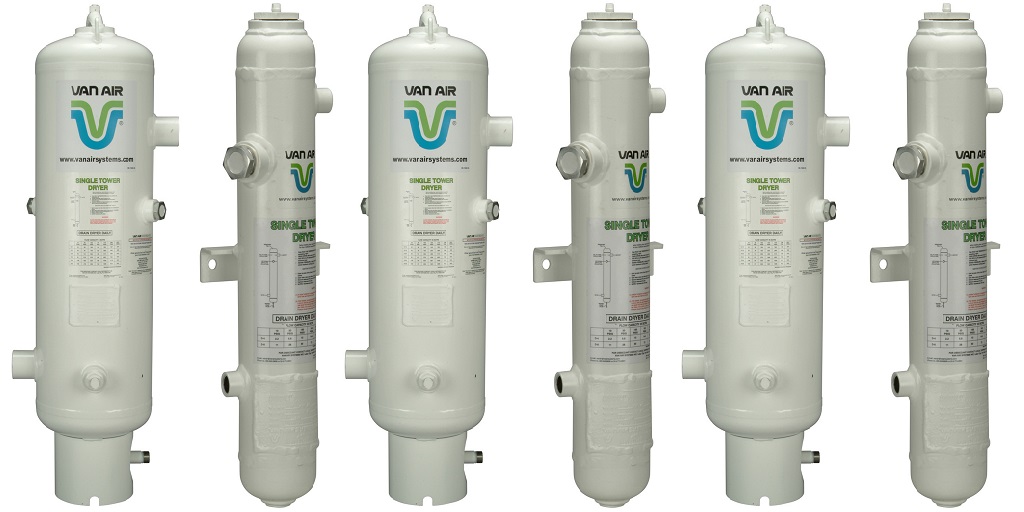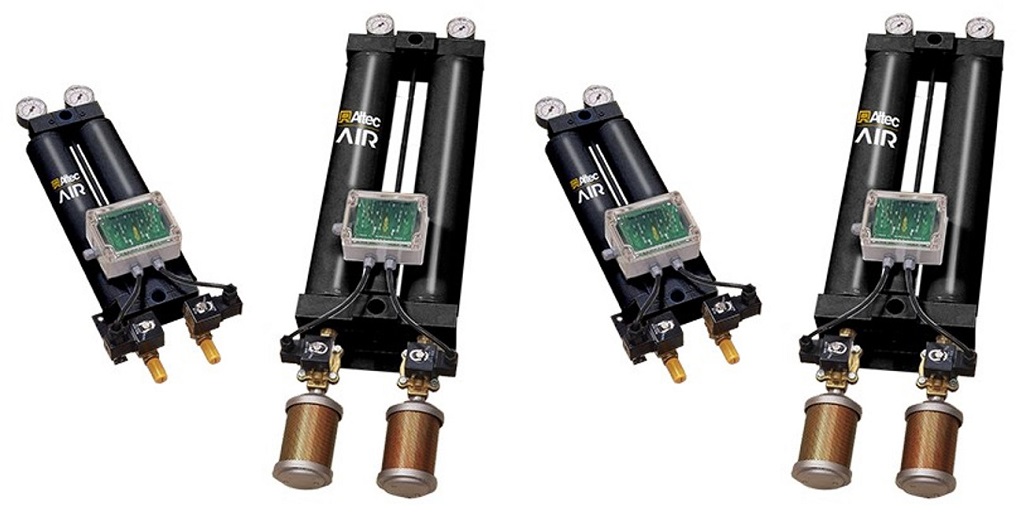
Regenerative Desiccant Air Dryers: Functionality and Application
In many industrial and commercial applications, the presence of moisture in compressed air systems can cause serious performance issues, system degradation, and even product contamination. To combat this, various drying methods are used to remove water vapor from compressed air, with regenerative desiccant air dryers standing out as one of the most reliable solutions for achieving ultra-low dew points.
This article explores the functionality of regenerative desiccant air dryers, and highlights their use cases across multiple industries.
What Is a Regenerative Desiccant Air Dryer?
A regenerative desiccant air dryer is a type of compressed air dryer that removes moisture from air through a process of adsorption using a desiccant material. Unlike refrigerant dryers, which are limited to dew points around 35°F to 50°F, regenerative desiccant dryers can achieve dew points as low as -100°F, making them ideal for sensitive or high-purity applications.
These dryers are designed to handle continuous operation by utilizing dual-tower systems, where one tower actively dries the compressed air while the other is in regeneration mode, purging the accumulated moisture and restoring the desiccant’s adsorption capacity.
How Regenerative Desiccant Dryers Work
1. Adsorption Phase
- Compressed air flows into the drying tower filled with a desiccant material, usually activated alumina, silica gel, or molecular sieve.
- Water vapor in the air is adsorbed onto the surface of the desiccant.
- The dried air exits the tower with a very low dew point.
2. Regeneration Phase
- Once the desiccant becomes saturated with moisture, the dryer automatically switches towers.
- The saturated tower undergoes regeneration using one of the following methods:
- Heated purge: Uses a small amount of hot, dry compressed air to remove moisture.
- Heatless purge: Uses expanded dry air from the outlet side (no external heat source).
- Blower purge: Utilizes ambient air blown through a heater to regenerate the desiccant.
- Heated purge: Uses a small amount of hot, dry compressed air to remove moisture.
- After regeneration, the tower is ready for the next cycle.
This cycling allows for continuous operation, minimizing downtime and ensuring a steady supply of dry air.
Types of Regenerative Desiccant Air Dryers
There are three main types, distinguished by their regeneration method:
1. Heatless Regenerative Dryers
- Do not use external heat.
- Use a portion (~15%) of the dried air for regeneration.
- Simple and reliable, but slightly less energy efficient.
- Ideal for remote or hazardous environments where electrical heating is not feasible.
2. Heated Purge Regenerative Dryers
- Use an electric heater to warm the purge air, reducing the amount of air needed for regeneration.
- More energy efficient compared to heatless types.
- Suitable for large-scale operations where efficiency is crucial.
3. Blower Purge Regenerative Dryers
- Use a blower and heater to circulate ambient air for regeneration instead of using compressed air.
- Most energy efficient.
- Commonly used in facilities with large, centralized air systems.
Use Cases Across Industries
Pharmaceutical Manufacturing
- Requires sterile, moisture-free environments for product integrity.
- Compressed air used in tableting, capsule filling, and pneumatic conveying must be extremely dry.
Electronics and Semiconductor Manufacturing
- Even microscopic water droplets can cause defects in circuitry or short circuits.
- Ultra-dry air is critical for wafer processing, PCB cleaning, and component packaging.
Automotive and Aerospace
- Air used in painting or coating applications must be moisture-free to avoid finish defects.
- Also used in brake testing, leak detection, and tool operation.
Power Plants and Utilities
- Instrument air for turbine control systems must be dry to prevent freezing and corrosion.
- Also used in flue gas desulfurization systems.
Chemical and Petrochemical Plants
- Air-powered instrumentation and control systems must be reliable.
- Moisture can lead to line blockages, corrosion, or false readings.
Industrial Painting and Coating
- Ensures consistent and high-quality application of paints, powders, and sealants.
- Eliminates the risk of “fish eyes,” bubbles, or delamination caused by moisture.
Reliable Regenerative Desiccant Air Dryers For Your Needs
Regenerative desiccant air dryers offer a powerful solution for maintaining air purity in compressed air systems across a wide range of demanding applications. Their ability to deliver ultra-dry air reliably, even in harsh or sensitive environments, makes them essential for any facility where moisture could impact product quality, safety, or equipment performance.
While they require a higher initial investment than refrigerant dryers, the long-term benefits—including reduced downtime, better product quality, and extended equipment life—make them a wise choice for industries that can’t afford to compromise on air quality.
Check out Air & Vacuum Process, Inc. online to find the right regenerative desiccant air dryer for your application. They specialize in a variety of compressed air and gas dehydration solutions!
For more information about Quiet Compressor and 26 Gallon Air Compressor Please visit: Air & Vacuum Process Inc.