
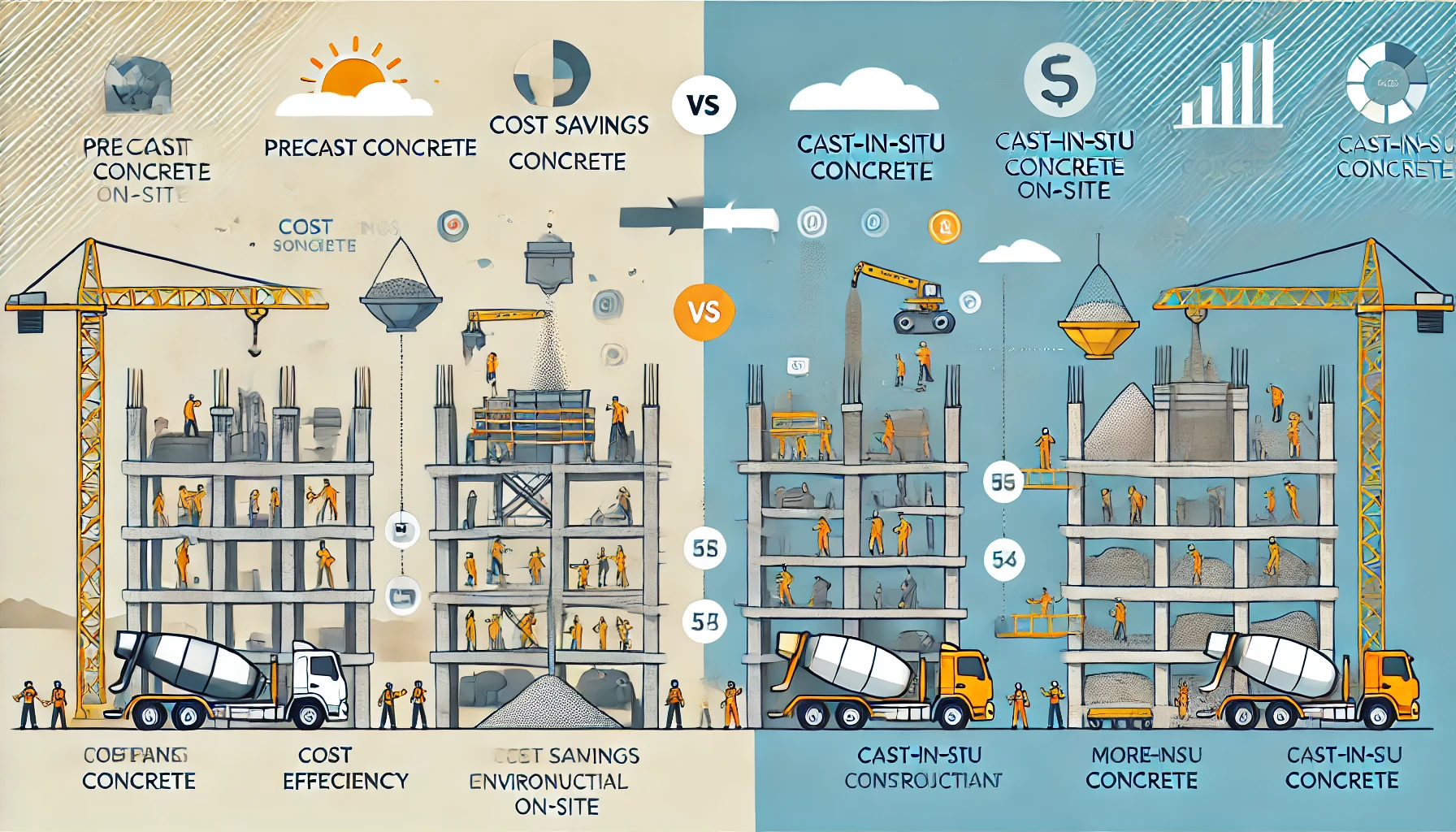
https://fuelpumpexpress.com

Precast vs. Cast-In-Situ Concrete Cost Savings Analysis

If you’re managing construction projects, you know the drill—tight deadlines, skyrocketing labor expenses, and unexpected delays burning through your budget. But here’s the critical question: is your choice of concrete construction method making things worse?

We dove deep into a comprehensive five-year data study comparing precast and cast-in-situ concrete across material wastage, labor efficiency, project duration, lifecycle maintenance, and environmental impact. The results? Clearer and more surprising than you might expect.

Why the Concrete Debate Matters (Real Numbers Revealed)

Precast Concrete cuts total project costs by up to 70.4% compared to cast-in-situ.Material wastage is drastically reduced, meaning lower expenses.Labor needs shrink by 26%, dramatically cutting wage bills.Construction times drop by 40-50%, speeding up ROI significantly.

Let’s dig deeper.

1. Material Wastage – The Silent Cost Killer

Did you know construction waste quietly erodes your profits? Spilled mixes, damaged materials, and errors accumulate into massive hidden expenses.

Precast Concrete:

  • Manufactured in controlled environments.
  • Virtually eliminates wastage due to precise measurements.
  • Excess materials easily recycled and reused.

Cast-In-Situ Concrete:

  • High wastage from spills, formwork errors, and weather interference.
  • Frequent rework due to weather-related curing issues.

Result: Precast drastically reduces waste, directly boosting your bottom line.

2. Labor Efficiency – Doing More with Less

Labor expenses aren’t just salaries—they also include supervision, insurance, and safety management.

Precast Concrete:

  • Requires 26% fewer workers.
  • No on-site formwork reduces safety risks and insurance overhead.

Cast-In-Situ Concrete:

  • Demands specialized skilled labor, increasing salaries.
  • Greater supervisory requirements elevate indirect labor costs.

Result: Fewer workers and lower indirect costs put precast significantly ahead.

3. Time Savings – Every Day Counts

Time is literally money in construction—each saved day accelerates your return on investment.

Precast Concrete:

  • Reduces overall construction time by 40–50%.
  • Components arrive ready to install, eliminating curing delays.
  • Just-in-time (JIT) logistics enhance project scheduling.

Cast-In-Situ Concrete:

  • Extended construction time due to curing and site preparation.
  • Weather delays significantly push schedules back.

Case Example: A recent high-rise precast project completed 6 months ahead, saving millions compared to an equivalent cast-in-situ build.

Result: Quicker project turnaround boosts your profitability.

4. Lifecycle & Maintenance – Hidden Long-Term Costs

Initial savings can vanish if ongoing maintenance isn’t considered.

Precast Concrete:

  • Superior durability due to factory-controlled quality.
  • Lower ongoing maintenance costs (fewer cracks, minimal repairs).

Cast-In-Situ Concrete:

  • Vulnerable to cracks, weathering, and regular maintenance needs.
  • Higher long-term maintenance expenses can negate initial savings.

Result: Precast’s superior durability protects your profits for years.

5. Environmental & Sustainability Impact – Green Pays Off

Sustainable practices aren’t just ethical—they significantly reduce costs.

Precast Concrete:

  • Lower carbon emissions due to streamlined manufacturing.
  • Minimal waste and reusable materials reduce disposal costs.

Cast-In-Situ Concrete:

  • Increased emissions from on-site batching and transportation.
  • Higher environmental waste management costs.

Result: Precast aligns environmental sustainability with cost savings.

6. Real-World Results: Precast vs. Cast-In-Situ (5-Year Study)

In a major infrastructure comparison, precast concrete demonstrated:

  • 70.4% total project cost savings
  • 45% reduction in construction duration
  • 26% reduction in labor expenses

Cast-in-situ struggled with higher labor costs, extended timelines, and increased overall spending due to frequent delays and waste.

The data confirms precast concrete consistently outperforms on all key metrics.

How Tekance Drives These Savings Even Higher

Making the switch to precast is just the first step. Maximizing its benefits demands precise detailing.

Tekance’s Precast Detailing Services:

  • Generate accurate precast shop drawings to slash material waste.
  • Ensure exact alignment of components, eliminating costly reworks.
  • Streamline scheduling for peak efficiency and cost-effectiveness.

Result: Tekance transforms precast potential into guaranteed savings.

FAQs You Need Answered

Is precast always cheaper than cast-in-situ? Not always. Initial mold costs and transportation might seem higher, but long-term labor and efficiency benefits make precast cheaper overall.

Does precast concrete offer better durability? Absolutely. Factory conditions ensure higher strength, reliability, and reduced repairs.

Are there scenarios where cast-in-situ might be better? Yes. Unique, custom designs with complex geometries sometimes require cast-in-situ flexibility.

Final Verdict: Which Should You Choose?

For projects demanding cost-efficiency, speed, durability, and reduced environmental impact, precast concrete is clearly superior.

And with expert detailing from Tekance, you maximize these advantages, leaving competitors stuck in the concrete past.

Ready to maximize your precast savings? Tekance is here to help.

Learn about Professional Civil Engineering Services for Infrastructure and Construction Projects
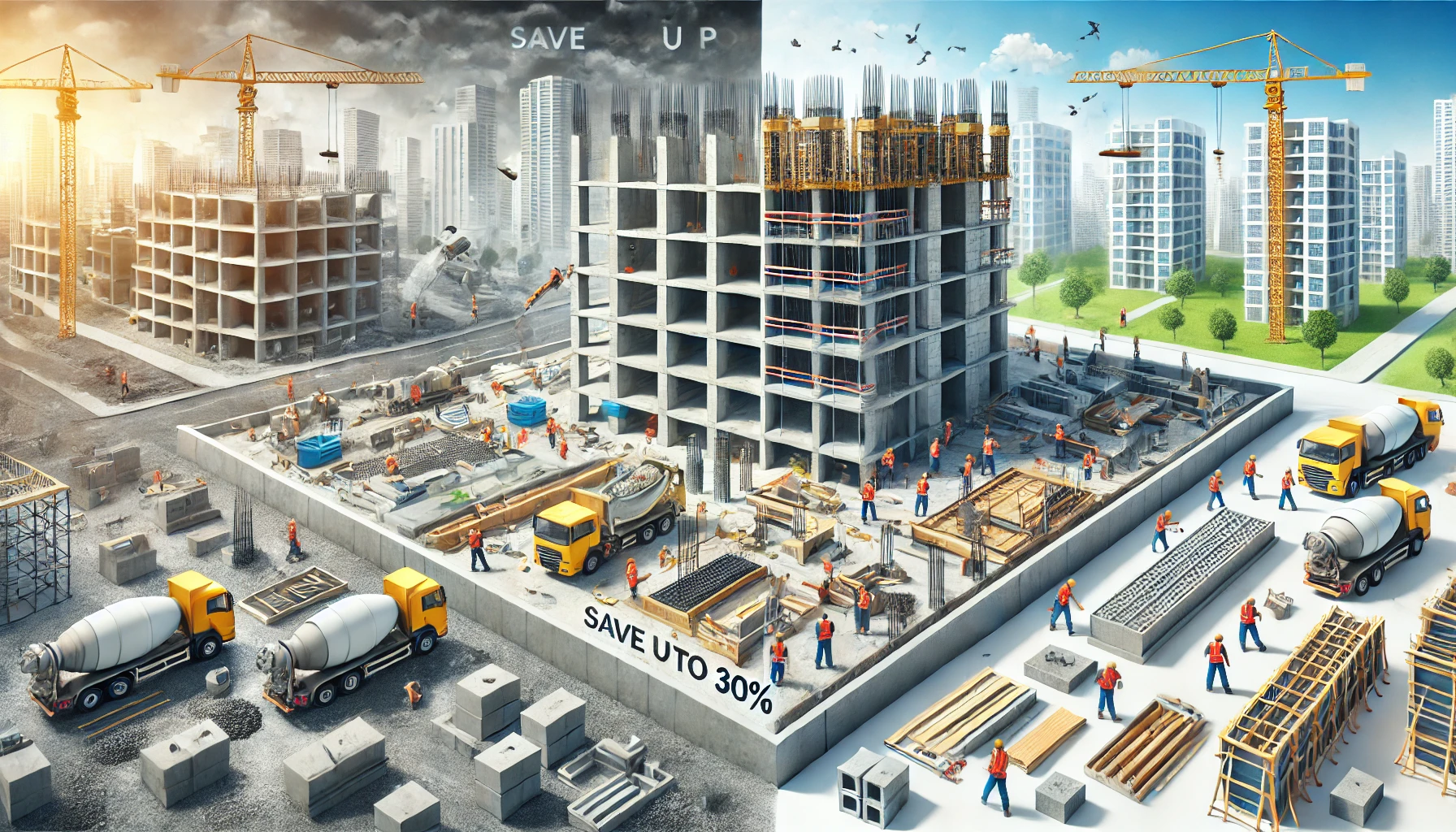
Save Up to 30%: Precast vs. Traditional Construction Costs

In today’s fast-paced construction industry, time and money are everything. Whether it’s a high-rise, a bridge, or a commercial complex, efficiency is key. With rising material prices and labor shortages, contractors are constantly looking for cost-effective alternatives without compromising quality.

Enter precast detailing—a modern construction approach that promises faster project timelines, lower costs, and improved durability. But how does it stack up against traditional methods?

We’ve done the research, crunched the numbers, and found that precast detailing can reduce costs by up to 30%, cut project timelines in half, and significantly lower labor expenses.

Let’s dive into a detailed cost comparison, efficiency analysis, and real-world savings breakdown so you can decide which method is best for your next project.

Key Takeaways: Why Precast Wins

Up to 30% cheaper than traditional construction
50% faster project completion time
15% less material waste, reducing environmental impact
30-40% lower labor costs due to factory-controlled production
Stronger, more durable structures with minimal maintenance

What is Precast Detailing?

Precast detailing is a modern construction technique where concrete components are cast off-site in a controlled factory setting. These pieces are then transported to the site and assembled like LEGO blocks, eliminating many challenges faced in traditional on-site construction.

How Precast Works

  1. Design & Digital Modeling – Engineers create precise 3D models of each component.
  2. Factory Production – Concrete is poured in temperature-controlled conditions, ensuring zero weather delays and minimal waste.
  3. Transportation & Assembly – The precast elements are delivered and quickly assembled on-site, cutting project timelines significantly.

🔹 Why It’s Cost-Effective: No weather-related delays, fewer workers needed, and zero material miscalculations.

💡 Want to learn more about how precast eliminates costly on-site errors? Read this guide.

Traditional Construction: Why It’s More Expensive

Traditional construction involves pouring concrete on-site, which may seem straightforward, but the reality is far more complex—and costly.

Problems with Traditional Methods:

Higher Labor Costs: Requires more on-site workers, increasing expenses.
Weather Delays: Rain, extreme temperatures, and humidity slow down construction.
Material Waste: More concrete is wasted due to miscalculations and rework.
Longer Build Time: Construction is delayed while waiting for concrete to dry and cure.

🔹 Why It’s Inefficient: Unpredictability, waste, and delays lead to higher overall project costs.

Precast vs. Traditional: Cost Breakdown

To understand the financial impact, here’s a direct cost comparison between precast detailing and traditional construction:

Cost FactorPrecast DetailingTraditional ConstructionSavings (%)
Material CostsLower (bulk production)Higher (on-site mixing)15%
Labor CostsLower (factory-controlled)Higher (on-site workers)30-40%
Construction Time50% fasterDelayed (weather, labor)50%
Maintenance CostsLowerHigher20%
Waste ReductionHigh efficiencyHigh waste15%

📌 Potential Savings: Up to 30% of total project costs!

💡 Want to know more about quality control in precast construction? Read this detailed evaluation.

Speed & Efficiency: How Precast Saves Time & Money

Time is money in construction. Every extra day means higher labor costs, extended deadlines, and lost revenue.

50% faster project completion
Fewer workers needed → Lower labor expenses
No waiting for concrete to dry → Faster project turnover

💡 Real-World Example: A company using precast completed their project in half the time, saving millions in labor costs!

📊 For insights into the latest precast detailing trends in 2025, check out this industry report.

Durability & Long-Term Maintenance Savings

Precast structures aren’t just cost-effective; they’re also built to last.

Higher resistance to weather, corrosion, and wear
Lower maintenance costs compared to traditional concrete
Longer lifespan means fewer repairs over time

💡 Case Study: A precast bridge in the US has lasted over 50 years with minimal maintenance, saving taxpayers millions!

FAQs: Your Questions Answered

1. How much money can I save by using precast instead of traditional methods?
➡ You can save up to 30% in total construction costs, mainly due to lower labor and material waste.

2. Is precast concrete as strong as traditional concrete?
Yes! Precast concrete is often stronger because it’s produced in controlled factory conditions, ensuring perfect consistency and durability.

3. Does precast detailing require special installation?
Not really. It’s different, but actually easier and faster than traditional construction.

4. Are there hidden costs with precast?
➡ The initial costs may seem higher, but you save significantly on labor, waste, and time—making it cheaper overall.

5. Can precast be used in home construction?
Absolutely! Many modern homes use precast panels for faster, more cost-effective, and energy-efficient construction.

Final Thoughts: Why Precast is the Future of Cost Savings

Precast saves money—up to 30% in total costs.
It’s faster, stronger, and more efficient than traditional methods.
Less waste, lower labor costs, and better durability mean long-term savings.

🔹 Thinking about switching to precast for your next project?

🚀 Explore our precast detailing services and projects and see how we can revolutionize your construction strategy!

Learn about Precast Concrete Components: Benefits, Types & Construction Guide