
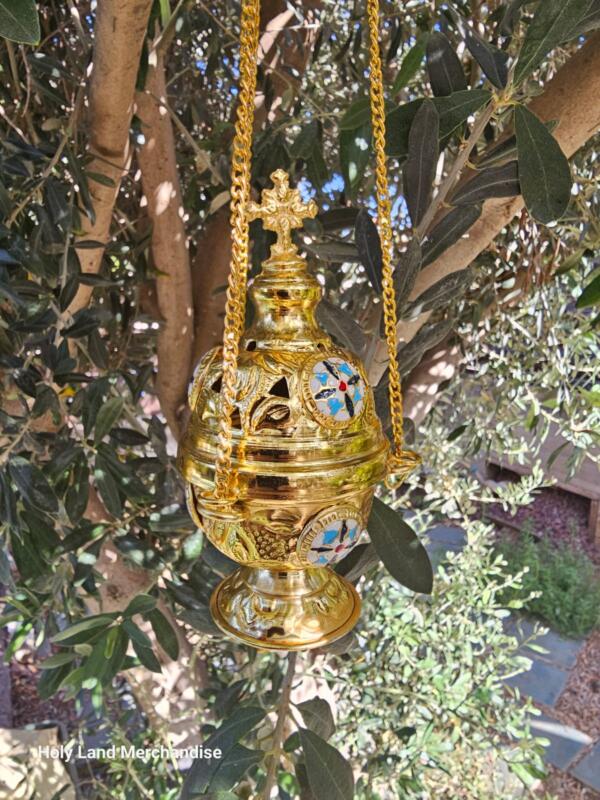
The History and Evolution of the Thurible in Catholic Tradition
In Catholic tradition, the Catholic church thurible—also known as a censer—is more than a liturgical tool; it’s a deeply symbolic vessel that enhances the worship experience through the ritual use of incense. Used for centuries in sacred rites, its fragrant smoke represents the prayers of the faithful ascending to heaven. This article traces the historical roots, cultural influences, and evolving designs of the thurible within the Catholic Church.
Ancient Origins of Incense Use
The use of incense predates Christianity, originating in ancient religious practices across the Middle East, Egypt, and Asia. In the Old Testament, incense featured prominently in Jewish worship, particularly in the Tabernacle and later the Temple of Jerusalem (Exodus 30:1–10). This tradition influenced early Christian communities, especially as Christianity grew from Jewish roots. Incense quickly found a place in Christian liturgical life, serving as a symbol of divine presence and reverence.
Early Christian and Medieval Adoption
By the 4th century, incense began appearing regularly in Christian worship, especially as the Church emerged from persecution and formalized its liturgies. The thurible evolved into a distinct vessel—typically a small metal container with perforations and a chain—designed for burning incense during Mass, funerals, and feast days.
In the medieval period, thuribles became more elaborate, often made of bronze, brass, or silver. Gothic cathedrals, with their soaring architecture, lent themselves to dramatic uses of incense, enhancing the visual and sensory impact of worship. The thurible became a liturgical centerpiece, used not only for functional purposes but also as a symbol of divine mystery.
Regional Styles and Variations
Over time, different regions developed unique styles of thuribles. In the Latin (Roman) Rite, thuribles usually featured a four-chain design with a removable top for easy access. In contrast, Eastern Catholic and Orthodox Churches often used more ornate censer styles, including bells on the chains to create a rhythmic sound during processions.
One famous variation is the Botafumeiro in Santiago de Compostela, Spain—an enormous thurible suspended from the cathedral ceiling, which swings dramatically across the nave during major feasts.
Symbolism in Catholic Liturgy
The thurible is rich in symbolism. The rising smoke signifies prayers ascending to God, a concept rooted in Psalm 141:2: “Let my prayer be counted as incense before you.” It also symbolizes purification, sanctifying the altar, clergy, and congregation during the Mass. Incense is especially used during High Masses, Eucharistic Adoration, funerals, and solemnities.
The act of incensing also follows strict rubrics, including the number of swings and the specific items to be incensed (altar, cross, clergy, faithful, etc.), each act layered with meaning and reverence.
The Thurible Today: Continuity and Craftsmanship
Modern Catholic thuribles maintain traditional designs but are now made in various finishes and materials, including brass, bronze, and stainless steel. Artisans continue to craft handmade thuribles in regions like the Holy Land, where the spiritual heritage enriches each piece.
Despite advances in technology and simplified liturgies after Vatican II, incense remains an essential part of Catholic worship in many churches worldwide. The resurgence of interest in traditional rites has also renewed appreciation for the thurible’s role in fostering sacred beauty and contemplation.
Conclusion
From its ancient beginnings to its continued use in modern worship, the thurible embodies the Catholic Church’s enduring connection to sensory and symbolic traditions. Its graceful smoke connects heaven and earth, the physical and the spiritual, enriching the liturgy with beauty and depth. As both a historical artifact and a living instrument of prayer, the thurible stands as a testament to the Church’s devotion across time.