
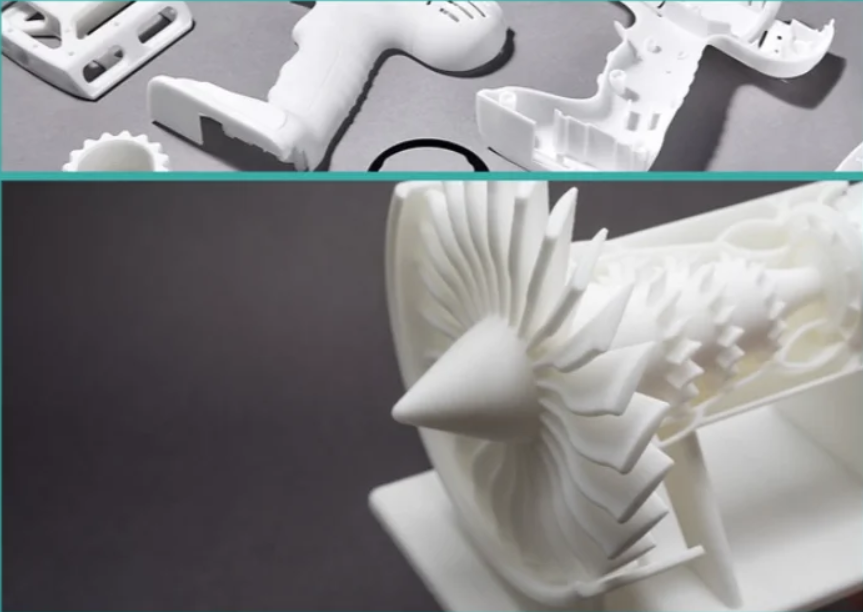
What is Selective Laser Sintering (SLS) 3D Printing?
Selective Laser Sintering (SLS) is an advanced 3D printing technology that has revolutionized manufacturing and prototyping processes. This additive manufacturing technique creates highly detailed and durable parts by fusing powdered material using a laser. Unlike other 3D printing methods, SLS stands out for its ability to produce intricate, functional parts without the need for support structures, making it a versatile solution across industries.
In this article, we’ll delve into the key aspects of Selective Laser Sintering, exploring how it works, its benefits, materials, and its wide-ranging applications.
How Does Selective Laser Sintering Work?
SLS is a powder-based 3D printing process that uses a high-powered laser to selectively fuse powdered material layer by layer. The process begins with a 3D CAD (Computer-Aided Design) model, which is sliced into thin layers using specialized software. The printing process involves the following steps:
1. Powder Spreading
A thin layer of powder, such as nylon, polyamide, or thermoplastic elastomers, is spread evenly across a build platform. The material is held at a temperature slightly below its melting point.
2. Laser Sintering
A laser beam scans the surface of the powder, heating and fusing the particles in the specific areas defined by the CAD design. This solidifies the material and creates a single layer of the part.
3. Layer-by-Layer Fusion
The build platform lowers slightly, and a new layer of powder is spread over the previous one. The laser repeats the sintering process, fusing the new layer with the one below it.
4. Cooling and Finishing
Once the part is complete, the entire build volume cools down gradually to prevent warping. The finished part is then removed from the surrounding powder, which can often be reused for future prints.
Materials Used in SLS 3D Printing
SLS technology primarily uses thermoplastic powders, which are known for their durability and flexibility. Common materials include:
1. Nylon (Polyamide)
Nylon is one of the most widely used materials in SLS printing. It offers excellent mechanical properties, including strength, flexibility, and heat resistance, making it ideal for functional prototypes and end-use parts.
2. Glass-Filled Nylon
This material combines nylon with glass particles, enhancing its stiffness and thermal stability. It is commonly used in automotive and aerospace applications.
3. Thermoplastic Elastomers (TPE)
TPE materials provide elasticity and impact resistance, suitable for applications like seals, gaskets, and flexible components.
4. Metal Powders
Although less common, SLS can also process metal powders for applications requiring high strength and thermal resistance, such as tooling or industrial components.
Benefits of Selective Laser Sintering
SLS 3D printing offers several advantages, making it a preferred choice for many industries:
1. No Need for Support Structures
Unlike other 3D printing methods, such as FDM or SLA, SLS does not require support structures. The surrounding powder acts as a natural support, allowing for complex geometries and intricate designs.
2. High Durability and Functionality
The parts produced through SLS are robust and functional, making them suitable for prototyping and end-use applications. The mechanical properties of SLS parts often rival those of injection-molded components.
3. Design Freedom
SLS enables the creation of complex, intricate designs that would be impossible or cost-prohibitive with traditional manufacturing techniques.
4. Efficient Material Usage
Unused powder can often be recycled for future prints, reducing material waste and lowering costs.
5. Faster Production
SLS can produce multiple parts simultaneously in a single build, improving efficiency and reducing production time.
Applications of Selective Laser Sintering
SLS 3D printing is used in a wide array of industries due to its versatility and reliability. Key applications include:
1. Prototyping
SLS is a go-to solution for creating functional prototypes that mimic the properties of final products. It allows engineers to test and refine designs before full-scale production.
2. Aerospace and Automotive
The ability to produce lightweight, high-strength components makes SLS an invaluable tool in aerospace and automotive manufacturing. Parts such as ducts, brackets, and housings are commonly made using this technology.
3. Medical Devices
SLS is used to produce custom medical devices, including orthotics, prosthetics, and surgical guides, due to its precision and biocompatible material options.
4. Consumer Goods
From eyewear to footwear, SLS enables the creation of customized, durable consumer products with intricate designs.
5. Industrial Tooling
SLS is often employed to create molds, jigs, and fixtures for manufacturing processes, offering cost-effective and time-efficient solutions.
Challenges of Selective Laser Sintering
While SLS offers numerous benefits, it does have some challenges:
- High Initial Investment: The equipment and materials for SLS can be expensive, making it less accessible for small businesses.
- Surface Finish: Parts may require post-processing, such as sanding or polishing, to achieve a smooth surface.
- Material Limitations: Although SLS works with a variety of materials, its range is not as broad as some other 3D printing methods.
Conclusion
Selective Laser Sintering (SLS) is a powerful 3D printing technology that combines precision, efficiency, and versatility. Its ability to produce durable, functional parts with complex geometries has made it a cornerstone in industries ranging from aerospace to consumer goods. While the technology does come with some challenges, its benefits far outweigh the limitations.
For businesses and individuals looking to innovate and streamline production, SLS offers a cutting-edge solution that is both reliable and cost-effective. Whether you’re prototyping, creating end-use parts, or exploring new design possibilities, selective laser sintering is a technology worth exploring.