
https://fuelpumpexpress.com

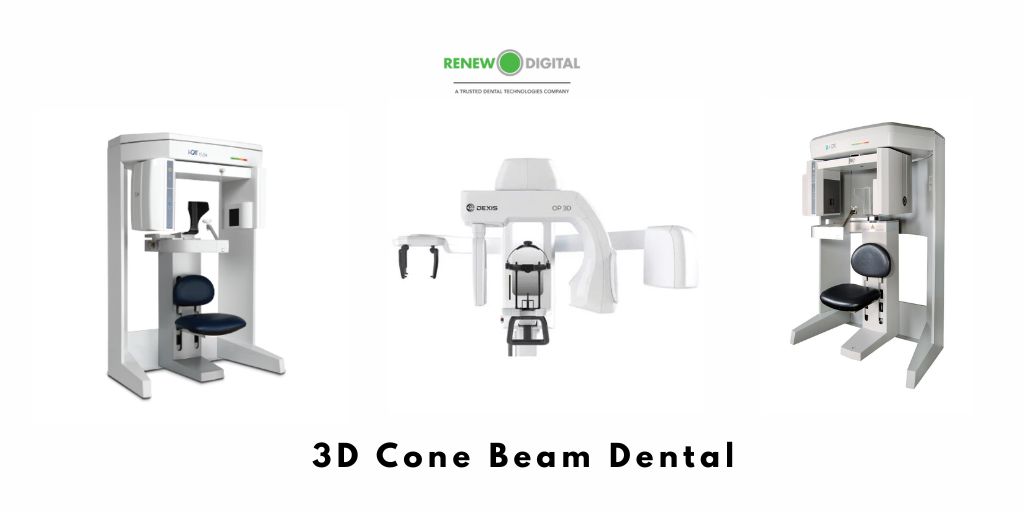
When Should General Practitioners Consider 3D Cone Beam Dental Systems?

While the 2-dimensional scans produced by traditional, panoramic dental X-ray systems have been the standard for a long time – and have even been accepted in the wake of digital technology – many general practitioners are wondering, “When is it really worth the investment in upgrading to 3D cone beam dental systems?” 

They are substantially more expensive than traditional panoramic X-ray systems, so it’s a valid question, but at the same time, their significantly advanced functionality and imaging diagnostic potential may justify the expense. 

Here are some of the situations in which general practitioners might want to seriously think about upgrading to dental CBCT technology. 

Traveling Endodontics or Orthodontists Who Periodically Visit the Office 

Traveling endodontists and orthodontists are sometimes referred to in the industry as “mobile” or “on-site” specialists because they may not have a single home office and because they enable general practitioners to expand their service offering without the extra office space needed to have these specialists on-site all the time. 

But there’s a caveat – the space savings generated by leveraging a mobile specialist model are limited, especially if you don’t offer the imaging system (and other equipment) these specialists need to do their jobs effectively, not to mention to uphold a reasonable standard of care. 

The services provided by endodontists, such as root canals, as well as those provided by orthodontists, often require the precise imaging that only 3D cone beam dental scans can show. 

To Expand Service Offerings

For any general practitioner considering expanding his or her service offering beyond the basic, the benefits and advanced imaging capabilities of 3D cone beam dental technology might be an imperative. 

For instance, dental cone beam CT scans are recommended before implant planning, before endodontic surgery for surgical planning, and in some cases might even be recommended before root canal therapy – among many other treatments.

The complex, detailed images of 3D dental cone beam technology also offers better insight for diagnosing complex cases, TMJ analysis, and much more; assessing bone density and structure, the nature of infections or abscesses, and much more can all be done with much greater precision and confidence through 3D CBCT scans than other methods. 

Considering Implants 

Implant dentistry can be a lucrative field, but it requires an exceptionally high level of diagnostic accuracy for the purposes of implant planning. Assessing bone density, nerve pathways, the depth of tooth roots, and more fall under the purview of the clarity that can only be offered by the multi-planar 3D images of dental CBCT.

Selecting a suitable implant site is one of the most important precursors in setting a viable implant that does not fail – and reduces the need for retreatment. The use of 3D cone beam dental technology is effectively requisite. 

If You’re Otherwise Limited by 2D Systems 

While the learning curve associated with using 3D cone beam dental systems, as well as with effectively and confidently interpreting the scans can be intimidating, for any general practitioner that wants to improve his clinical service offerings and feels limited by 2D systems, it’s worth the upgrade.

For some practices, the limitations of 2D panoramic systems might be acceptable. For others they might not be. That is something you’ll have to determine. 

Save 30% to 50% Off Certified Pre-Owned 3D Come Beam Dental Systems 

If you’re one of the general practitioners who feels that the time to invest in 3D cone beam dental technology is now, don’t be put off by the higher sticker price. Work with Renew Digital and shop certified pre-owned CBCT systems instead of new ones; they routinely save their clients anywhere from 30% to 50% off used dental equipment and work closely with their clients on financing, installation, staff training, and support. 

For more information about used dental equipment and itero scanners Please visit : Renew Digital, LLC
 

How Orthodontists Improve Treatment Planning with 3D Cone Beam 

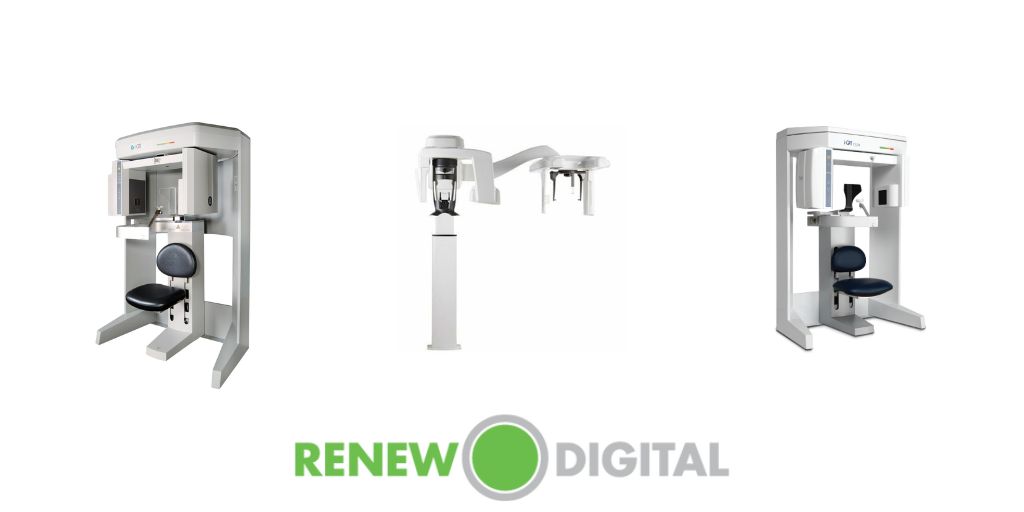
The use of 3D cone beam dental technology is as much a blessing to orthodontists as it is to general dentists. The ability to capture both hard and soft tissues, including nerve pathways, in exceptional, three-dimensional detail offers unparalleled ability to diagnose and treat a variety of dental and maxillofacial cases. 

Here’s how orthodontists are increasingly using dental CBCT technology to improve treatment planning. 

Uses of 3D Cone Beam Dental Systems in Orthodontics 

Dental CBCT technology has a myriad of uses cases in orthodontic applications. One of the biggest use cases is for the identification and diagnosis of impacted, transposed and ectopic teeth, especially with respect to their spatial relations to each other. CBCT can also be useful for detecting and qualifying supernumerary teeth, as well as for the purposes of gauging dental development of a tooth or follicle. 

Because craniofacial anomalies like cleft palates manifest in three-dimensions, the use of a three-dimensional scan provided by CBCT makes it much more accurate to gauge the severity of the impact with precision. CBCT can also be used to diagnose other similar conditions such as TMJ disorders. 

And, in all of these cases, one of the biggest benefits of the use of 3D CBCT over traditional 2D dental radiography is the CBCT system’s ability to construct different views from the CBCT volume, enabling orthodontists to “see” the anatomical structure from a different point of view.

Improving Orthodontic Treatment Planning with Dental CBCT Machines 

On top of its numerous use cases, 3D cone beam dental technology also expressly assists orthodontic specialists with improving treatment planning. 

In the case of assessing impacted or unerupted teeth, CBCT offers a great deal of detail that accurately represents the space between teeth and how the jaw and mouth will be affected by the dental development; CBCT scans enable orthodontists to accurately estimate how much space is needed per tooth. 

In cases where maxillary expansion may be warranted, the exceptional detail and insight into spatial relationships between hard and soft tissue make it possible for orthodontists to plan for the fabrication of custom orthodontic appliances and temporary anchorage devices, such as mini-plates or mini-implants that will properly fit the mouth of the patient. 

But 3D cone beam dental technology is not just essential to improving treatment planning; it also improves risk assessment and treatment progress assessment. 

In the case of risk assessment, dental CBCT can be used to assess root resorption, orthodontic paraesthesia, helping orthodontists to determine the safest options for proceeding. 

With respect to treatment progress, one of the biggest benefits of dental CBCT has to do with its ability to assess dentofacial orthopedics as well as their success while treatment is underway. In the case of patients with cleft palates, CBCT can shed valuable insight into the progress of bone grafts. 

All in all, the use of CBCT also helps with patient visualization and treatment acceptance, and by minimizing risk and increasing diagnostic and treatment planning accuracy, lowers the risk of the need for retreatment. 

Get Started Saving 30% to 50% Off 3D Cone Beam Dental Machines with Renew Digital 

Thinking it’s time for your practice to adopt a 3D cone beam dental system to improve workflows, expand service offerings, and increase the success of your treatment planning? 

Get started with Renew Digital, a premier provider of certified, pre-owned dental CBCT systems. They represent the top brands, including but not limited to Planmeca, CS Dental, and Vatech, and can save you anywhere from 30% to 50% off the price of a new system. 

Plus, they will work with you for financing, through installation and staff training, and support their used dental equipment as though it were new. What are you waiting for? Get in touch with them through their website or contact them directly at 888-246-5611 to get started. 


For more information about Itero Element and Dental Scanners Please Visit : Renew Digital, LLC