
Automotive Tensioner Market: Driving Innovation in Engine Performance and Mechanical Reliability
Introduction
The Automotive Tensioner Market is an essential subset of vehicle component engineering, governing the performance of belt-driven systems within internal combustion engines (ICEs), hybrids, and electric vehicles. Tensioners are designed to maintain appropriate tension across timing belts, serpentine belts, and accessory drives. Their role is vital in ensuring synchronization, reducing frictional losses, and extending the operational life of engine components.
As automotive powertrains evolve toward greater complexity, the tensioner’s function has expanded from simple mechanical adjustment to intelligent regulation. The global push for cleaner emissions, improved fuel efficiency, and refined noise-damping has resulted in heightened attention to precision belt operation. Rising vehicle production, consumer preference for reliable engines, and advancement in smart diagnostics have accelerated demand for efficient, durable, and adaptive tensioner solutions.
Manufacturers are focused on integrating high-performance tensioners into vehicles with compact engines, modular layouts, and digital control systems. Innovations in materials, damping mechanisms, and feedback sensors have transformed tensioners from passive mechanical parts into active contributors to fuel economy and vehicle health. The market is driven by OEM integration, aftermarket servicing, and component upgrades supporting enhanced performance and longevity.
The Evolution of Automotive Tensioners
Over the decades, tensioning technology has progressed in response to changing vehicle design and consumer demands. From manual adjusters to computer-controlled devices, the journey reflects a continuous pursuit of operational precision and mechanical longevity.
Early Systems
- Traditional engines relied on fixed-position pulleys requiring manual belt tightening.
- Tension adjustments were labor-intensive and imprecise, often leading to slippage, squeal, and belt failure.
Mechanical Spring Tensioners
- Introduced automation by using a calibrated spring and pivot arm to self-regulate belt tension.
- Provided consistent pressure without manual intervention, improving reliability and reducing maintenance needs.
Hydraulic Tensioners
- Used oil-based damping systems to control the motion of the tensioning arm.
- Smoothened operation under dynamic load conditions and reduced belt vibration during rapid acceleration or deceleration.
Evolution Toward Electromechanical Systems
- Smart tensioners employ sensors to monitor load, wear, and alignment.
- Data is used to adjust tension force in real time, reduce slack, and alert vehicle systems to impending wear or misalignment.
Advanced Materials and Manufacturing Techniques
- Lightweight composites, corrosion-resistant alloys, and friction-modifying coatings are now standard.
- Additive manufacturing and precision machining support mass customization and cost efficiency.
Source : https://www.databridgemarketresearch.com/reports/global-automotive-tensioner-market
Market Trends
The Automotive Tensioner Market reflects multiple global trends, shaped by engineering priorities, regulatory mandates, and consumer expectations.
- Growth in Electric and Hybrid Vehicle Integration: These platforms require complex belt systems for auxiliary components, often driven by tensioners optimized for quiet and vibration-free operation.
- Rising Adoption of Intelligent Components: Smart tensioners with feedback capabilities contribute to onboard diagnostics and predictive maintenance strategies.
- Demand for Lightweight Engine Parts: To support fuel economy and sustainability goals, manufacturers are using polymers and high-strength aluminum in tensioner construction.
- Surge in Aftermarket Personalization: Vehicle owners and mechanics are upgrading tensioners to improve engine response, noise control, and belt durability.
- Expansion of Modular Powertrain Designs: Tensioners are being adapted to fit smaller, turbocharged engines with higher RPM ranges and compact layouts.
- Noise Vibration Harshness (NVH) Optimization: Automotive engineering emphasizes low-noise operation, pushing tensioner development toward dampened, shock-resistant designs.
- Regulatory Pressure for Emission Reduction: More efficient belt-driven systems supported by tensioners help minimize power loss and contribute to cleaner engine performance.
- Digital Prototyping and Simulation Integration: CAD and CAE tools are accelerating tensioner development with real-time stress testing, load simulation, and design iteration.
Challenges
Despite technological progress, the Automotive Tensioner Market faces several operational and strategic challenges.
- Material Supply Constraints: High-grade polymers and metals used in advanced tensioners may face availability issues, impacting production timelines and cost.
- Complexity of Integration in New Powertrains: EVs and hybrids present unique architecture requirements that tensioners must adapt to without compromising performance.
- Maintenance Awareness Gap Among End Users: Vehicle owners often overlook tensioners during routine service, leading to premature belt wear and system failure.
- High Design Precision Requirements: Tensioners must be finely calibrated for each vehicle model and powertrain configuration, requiring extensive testing and standardization.
- Increased Competition from Chain and Gear Systems: Alternatives to belt drives, like timing chains or electric motor gears, may reduce reliance on tensioners in future architectures.
- Short Lifecycle Due to Rapid Platform Changes: Vehicle models and powertrain architectures evolve quickly, shortening the effective lifecycle of tensioner designs.
- Cost Sensitivity in Mass Production: OEMs seek tensioners that balance performance and affordability, placing pressure on component suppliers to innovate cost-effectively.
- Regulatory Compliance and Certification Overhead: Meeting global standards for safety, emissions, and noise reduction requires extensive validation and documentation.
Market Scope
The market spans a variety of applications across vehicle classes, distribution models, and stakeholder groups.
Applications
- Passenger cars
- Light commercial vehicles
- Heavy-duty trucks and buses
- Agricultural and construction equipment
- Two-wheelers and off-road vehicles
- Electric vehicles and hybrids
Components and Variants
- Belt tensioners for serpentine and timing belts
- Chain tensioners for timing systems
- Idler pulleys and complete tensioner assemblies
- Dynamic damping and shock-absorbing units
Stakeholders
- OEMs and Tier-1 suppliers
- Automotive component manufacturers
- Aftermarket retailers and service providers
- Simulation and software engineering firms
- Material and tool suppliers
- Regulatory agencies and testing organizations
Distribution Channels
- Factory-installed components in new vehicles
- Service replacement parts in authorized centers
- Aftermarket kits sold through auto part retailers and e-commerce
- Fleet servicing contracts and industrial suppliers
Geographic Footprint
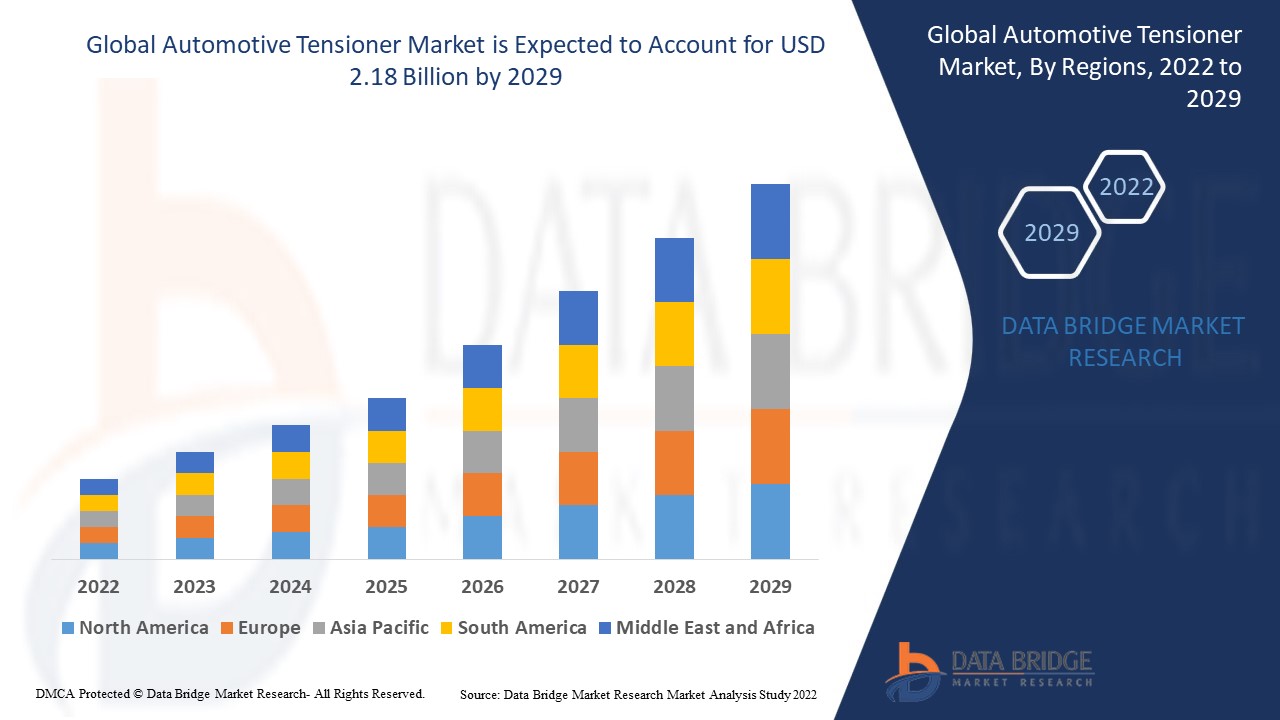
- North America and Europe: Major hubs for OEM manufacturing, technology development, and high-performance vehicle markets
- Asia-Pacific: Rapidly expanding production base, cost-competitive components, and growth in electric mobility
- Latin America and Africa: Emerging markets with growing aftermarket demand and industrial vehicle fleets
Market Size and Factors Driving Growth
The Automotive Tensioner Market is poised for sustained growth across segments and regions, fueled by macroeconomic and engineering trends.
- Global Vehicle Production Growth: Rising volumes of passenger and commercial vehicles directly boost demand for essential components like tensioners.
- Hybrid and EV Penetration: Advanced architectures require belt systems for cooling pumps, air conditioning, and power accessories, expanding tensioner applications.
- Focus on Fuel Economy and Emission Control: Tensioners enable precise operation of systems that affect engine load and power consumption.
- Proliferation of Aftermarket Services: Owners retain vehicles longer and invest in maintenance upgrades, driving aftermarket tensioner sales.
- R&D Investment by Tier-1 Suppliers: Competitive pressure and OEM partnerships stimulate investment in next-gen tensioner designs and smart system integration.
- Digitization of Diagnostics: Feedback-enabled tensioners contribute to predictive maintenance, improving fleet operations and service outcomes.
- Modular Vehicle Platforms: Unified platforms across different models increase demand for adaptable, standardized tensioner modules.
- Government Incentives for Automotive Infrastructure: Incentives for domestic manufacturing and supply chain localization strengthen regional tensioner production hubs.
- Expansion of Industrial and Off-Highway Vehicles: Agricultural and construction machinery rely heavily on belt systems powered by robust tensioners.
- Consumer Demand for Quiet, Efficient Vehicles: Preferences for smooth rides and minimal maintenance encourage use of advanced, noise-dampened tensioners.
Conclusion
The Automotive Tensioner Market is a critical pillar of powertrain engineering, underpinning engine efficiency, mechanical durability, and system integration. Tensioners are no longer passive components but dynamic contributors to energy optimization and vehicle health. Whether in combustion engines or electric platforms, their role continues to evolve in tandem with innovations in belt technology, materials science, and electronic control systems.
As the automotive sector transitions to smart mobility and sustainable practices, tensioners will be central to achieving mechanical harmony and precision across diverse vehicle platforms. Manufacturers must respond with scalable designs, embedded intelligence, and robust quality assurance to meet the rising expectations of OEMs and consumers. From production lines to service garages, tensioners will remain indispensable in the quest for performance excellence and mechanical reliability.